
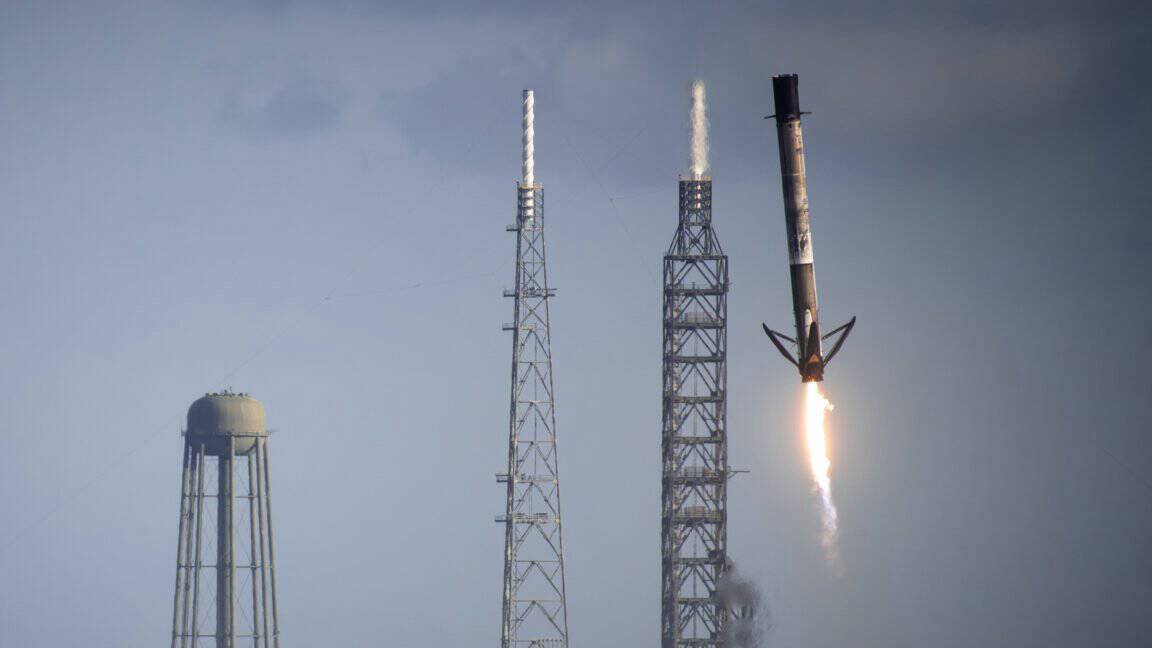

The number to remember is 1,000. That’s how many launches and reentries per year the US space transportation ranges are supposed to handle by 2030, according to the national space transportation policy President Donald Trump signed Thursday. Last year the US managed 176 orbital launch attempts from its own soil.
So the policy isn’t asking for growth. It’s asking for a different country’s worth of launch infrastructure.
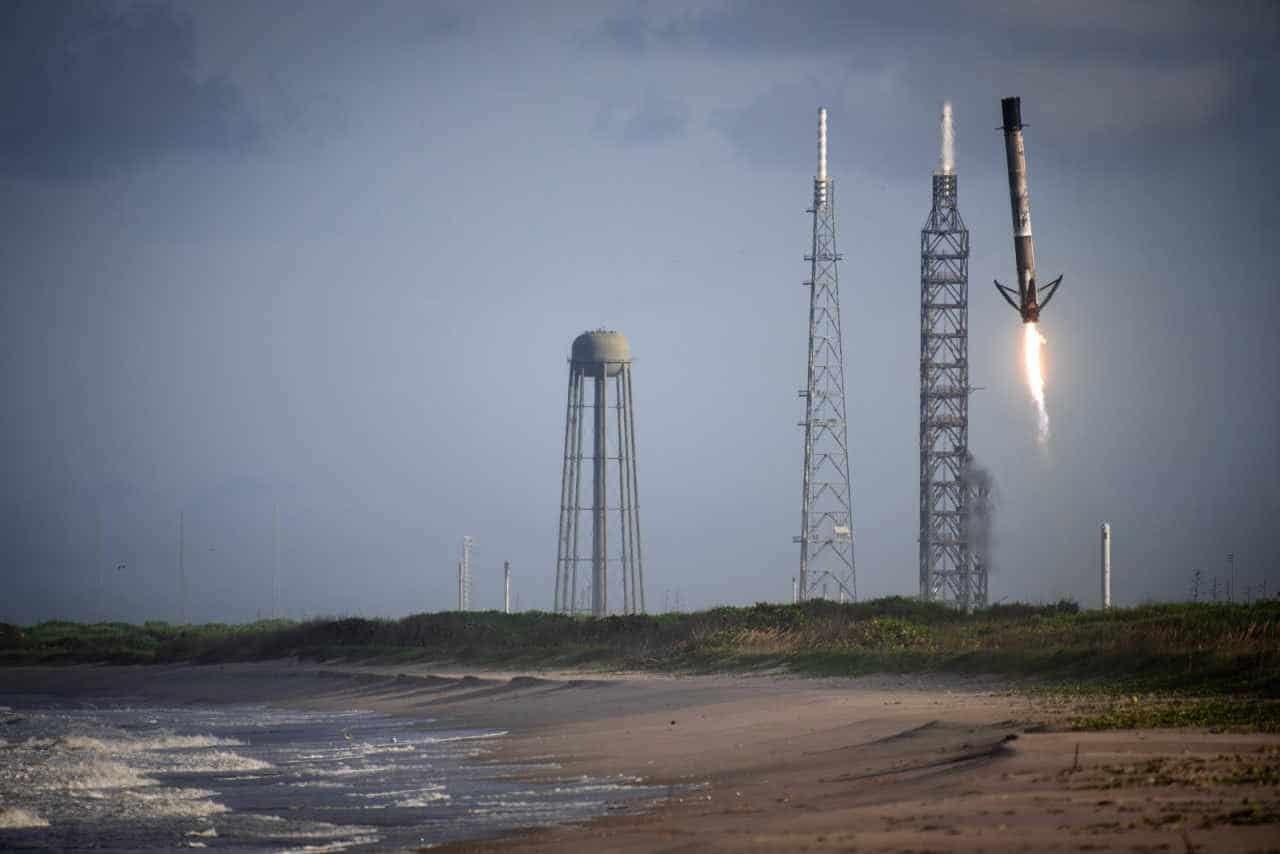
“By 2030, our space transportation ranges must grow to support more than 1,000 launches and reentries every year,” the policy says. “The policies set forth in this memorandum will secure America’s continued superiority in space.”
The Interior Department just got handed a real assignment
Most of a presidential memorandum like this is throat-clearing. This one has a line with teeth: the White House is directing the Department of the Interior to identify federal lands to serve as an additional designated federal land reentry site.
That follows the Interior Department’s Bureau of Ocean Energy Management issuing a request for public comment last month on the potential use of submerged lands and abandoned offshore oil rigs for sea-based space launches and reentry activities. Rusting oil platforms as spaceports is not a new idea in this business, but a federal agency formally asking the public about it is a different stage of seriousness.
The Pentagon already said two heavy-lift sites isn’t enough
The directive reads like an endorsement of a recent Pentagon study that found the government needs a third heavy-lift launch site in the United States. That report hasn’t been released. But Air Force Secretary Troy Meink described its conclusion in a May hearing before the House Armed Services Committee.
“At a high level, what it says is we probably need another site that’s capable of heavy and super heavy launch capability, both from a resiliency perspective and just, even at the Cape, limitations on how much space we’ve got,” Meink said.
Gen. Chance Saltzman, the Space Force’s top general, was at the same hearing and framed it as a geography problem as much as a capacity one.
“We’re going to have to increase the capacity,” Saltzman said. “And then, maybe connected to that, is the geographic resiliency that you might need to have separate launch locations and not be so tied to just the two specific launch ports that we have.”
He’s counting correctly. The federal spaceports are Cape Canaveral Space Force Station and NASA’s Kennedy Space Center, which sit on adjoining property in Florida, plus Vandenberg Space Force Base in California and NASA’s Wallops Flight Facility in Virginia. Only Florida and California are currently outfitted for heavy-lift launches.
Publishing the schedule is the quiet fix
Buried under the big infrastructure language is a change that affects anyone who tracks this stuff for a living. The policy directs the military and NASA to “regularly publish range schedules to ensure transparent allocation of resources and optimize launch capacity.”
Right now the schedules for most rocket launches aren’t public until a few days or weeks in advance. If you’ve ever tried to plan around a launch window, you know what that’s worth.
The same section supports more efficient range scheduling criteria at federally owned spaceports, balancing commercial users against US government missions. The government will also identify potential locations for additional launch facilities, improve integration of launch and reentry operations into airspace and air traffic control modernization work, and designate “priority airspace for critical space launch corridors.”
48 hours, from wherever
Another piece of the policy targets responsive launch: getting high-priority payloads into orbit within 48 hours of need, potentially from “expeditionary locations” well away from conventional ranges. Rocket Lab and Astra are already working on portable launch infrastructure, so this isn’t starting from zero.
The memo also backs NASA’s ongoing work on commercial transportation to and from the Moon, and directs the agency to support future commercial robotic and human expeditions to Mars.
What’s already in motion
Several tenets of the policy describe things the government is doing anyway: giving commercial users more access at federal ranges, expediting permitting and environmental reviews, and charging user fees to commercial launch companies operating out of NASA or US military spaceports.
The Trump administration also tells the Pentagon and NASA to “prioritize and coordinate on infrastructure investments” to boost launch and reentry capacity and flexibility at federal ranges. Whether that means new money or a reshuffling of existing money, the memorandum doesn’t say.
Why 2013 feels like a different industry
The memorandum replaces a 2013 policy signed by former President Barack Obama. Both emphasize supporting the commercial space industry and both underscore assured access to space, so the philosophy carried over.
The math didn’t. Those 176 orbital launch attempts from US soil last year are nearly 10 times the 2013 figure. SpaceX alone accounted for 165 orbital launches of its Falcon 9, plus five suborbital test flights of the much larger Starship.
The projected surge ahead comes from commercial and military demand for communications services, overhead surveillance, space-based targeting and orbital data centers.
Here’s the part worth watching. A policy can direct Interior to identify federal land tomorrow. Building a heavy-lift pad on it, with the environmental reviews, the airspace deconfliction and the propellant infrastructure a super heavy vehicle needs, takes years the 2030 deadline doesn’t obviously contain. Meink’s phrasing was “we probably need another site.” Probably is doing a lot of work in a memo that asks for a sixfold increase in launch cadence.

[…] not immediately aware of any larger mission, you’re allowed, invited even, to be absorbed into the wonder of space. And into figuring out increasingly unhinged ways to break the game's […]
[…] old Exxon property in the swamps of Vermilion Parish. SpaceX says it’s putting $100 billion into a second spaceport there, west of New Orleans and about 10 hours by road from the original Starbase in South Texas. […]
[…] Roman Space Telescope disappeared from view. Teams at the Payload Hazardous Servicing Facility at Kennedy Space Center in Florida closed a 43-foot shell around the observatory, and unless something goes badly wrong, […]