

In Brief:
- Portal (official site) launched Portal Nexus, the unified API it has been teasing since June under the working name GameRouter, and pointed creators to nexus.portalgaming.com.
- Nexus sits under Portal Studio and routes prompts to specialized models for code, sprites and audio, replacing the per-vendor key sprawl that agent workflows normally require.
- It’s the second of four products in the Portal 2.0 roadmap the Animoca-backed team laid out in April, with GameGen and GameHub (official site) still to come.
Portal Nexus is live.
The company confirmed the launch in a post on X this week and directed developers to nexus.portalgaming.com. “It’s been a loud week,” Portal said. “Portal Nexus has officially LAUNCHED, and your energy is amazing!”

It's been a loud week
Portal Nexus has officially LAUNCHED, and your energy is amazing!
Rest up this weekend, creators! The infrastructure never sleeps
https://nexus.portalgaming.com@PortalView on X ↗
Nexus had been carrying the internal label GameRouter since April, when Portal published its post-pivot product map. It shipped without a name change to the bracket.
What Nexus does
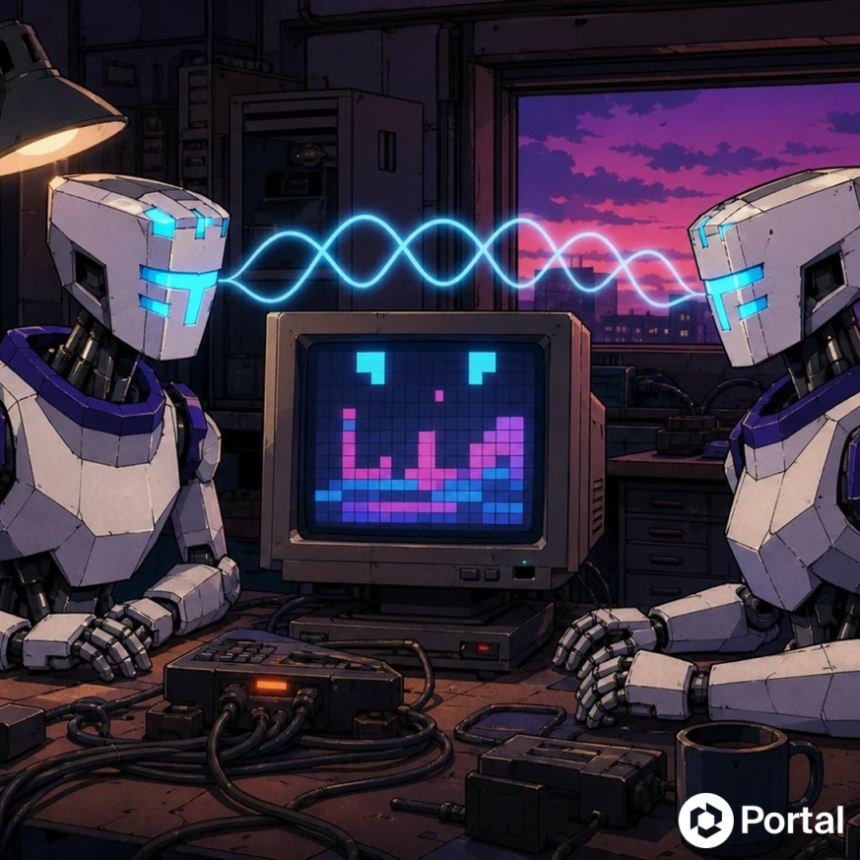
Portal describes Nexus as a single API interface for managing agents, assets and pipelines across a game-dev stack. The routing layer picks which model handles a given request, sending code, sprite and audio prompts to whichever specialized model fits.
The pitch in Portal’s June 22 teaser was blunt about the problem it’s aimed at. “Your agents shouldn’t have to battle your infrastructure just to get things done,” the company said. “Nexus is a unified API that powers your agents, assets, and pipelines across your entire game-dev stack.”
That teaser ran roughly a month before the launch post.
The Studio connection
Nexus isn’t a standalone tool so much as the plumbing under one. Portal Studio, the shared workspace the team shipped earlier this year, already calls specialized models from Nexus when creators generate characters, tiles and sprites, previewing output before it lands in a project.
Studio is stack-agnostic. Creators connect Claude, OpenAI or custom MCP workers into one map, and in a mid-June update Portal dropped the API key requirement entirely for agents running on Portal inference. Click an offline agent, pick a model, hit connect.
The framing the team uses for that workflow is that the creator acts as the director rather than the senior dev.
Studio also carries guided milestones for shipping a real game with agents in the loop, either pushing builds to an external engine or building on Gen8, Portal’s own integrated engine. Persistent Worlds let creators and players meet in shared space, and agents get Worlds of their own where they interact and trade on a user’s behalf.
From liquidity layer to AI stack
Portal spent its first two years as an interoperability and liquidity layer for web3 gaming. The company announced Portal 2.0 on April 18 and called it “Day 1.”
The pivot went to AI-native tooling and creator-first workflows, targeting non-developers alongside veteran studios. Four products were named: Studio, GameRouter, GameGen for prompt-generated games and GameHub for monetization. Two are now out.
Benjamin Charbit runs the company as CEO. He was a director at Ubisoft, where he worked on Assassin’s Creed IV: Black Flag, and took the job in December 2025 when Portal merged with BLIFE Protocol.
That merger was announced Dec. 22, 2025, with Animoca Brands and G-20 backing the relaunch. BLIFE brought in Beyond, a tridirectional Bitcoin L1 bridge it acquired in mid-2025 and is preparing for mainnet, plus BLIFE.ID and the memecoin platform Odin.fun. Portal Hub anchors the combined discovery layer. Leadership now draws primarily from Animoca.
An earlier version of Portal’s roadmap used the Nexus name for something else entirely: a cross-chain gaming experience for asset-to-asset transactions. The name survived the pivot. The product didn’t.
Where the token fits
Portal plans to use revenue from its AI tools to buy back PORTAL on a regular basis. Holders get early access, advanced tool usage rights and voting rights.
PORTAL sold 50 million tokens through Binance Launchpool between Feb. 22 and Feb. 28, 2024. Total supply is 1 billion, with roughly 592.5 million circulating. The token hit an all-time high of $3.36 on Feb. 29, 2024.
Before that, Portal raised more than $28.7 million across pre-sale and private rounds in December 2023. Backers included Rockstar Games co-founder Jamie King, EA Games Global Director of Platform Matt Dixon, Newman Group CEO Adrian Lai and Team Secret CEO John Yao.
Legacy staking is still unresolved. The team said in mid-June it was finalizing a solution and would publish an unstaking guide.
Portal closed its launch post with a note to the people now building on it: “Rest up this weekend, creators! The infrastructure never sleeps.”










[…] Nexus is the routing layer underneath. Portal shipped it in late July at nexus.portalgaming.com after teasing it since June under the working name GameRouter. It routes prompts to specialized models for code, sprites and audio behind a single API key and one credit balance covering 2D, 3D, voice, music and NPC tooling. […]