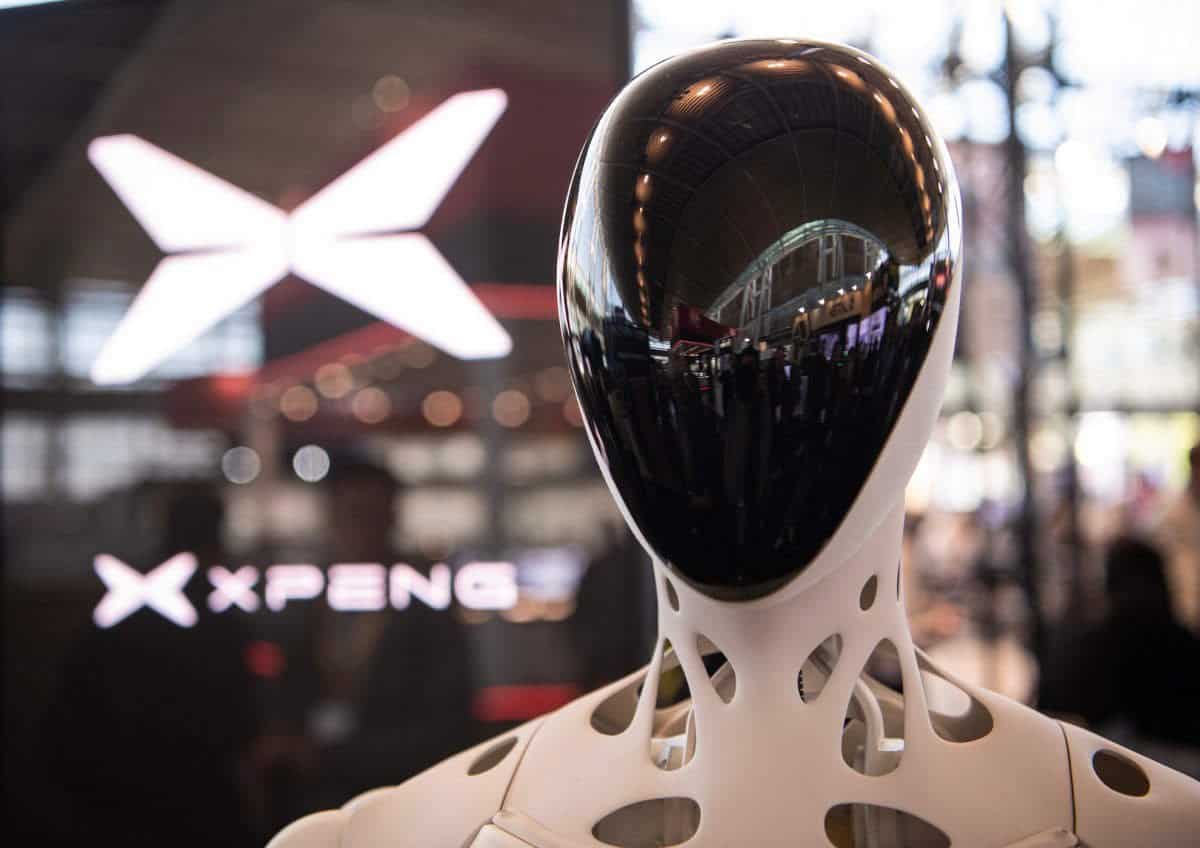

Xpeng’s robotics unit raised more than $900 million earlier this week at a post-money valuation of more than $6.3 billion. The company that builds its cars is staring down margins that everyone in the Chinese auto industry can see thinning out.
That gap explains most of what’s happening right now.
“He sees razor-thin profit in cars on the near horizon. Robots look much more promising,” said Michael Dunne, CEO of Dunne Insights, an advisory firm based in San Diego and Singapore, referring to Xpeng founder He Xiaopeng.
The funding round is the tell
IDG Capital led the round, with Gaorong Ventures, Tencent and Alibaba participating. Xpeng described it as the largest single-round private financing ever recorded in China’s “embodied AI” industry, meaning AI systems built directly into physical machines.
He Xiaopeng and Xpeng co-president Brian Gu put in roughly $100 million of their own money, according to reports. Founders writing personal checks into their own subsidiary is a stronger signal than any deck.
The product is Iron, a humanoid with a realistic human shape built for commercial deployment. Not a research platform. Not a stage demo.
Everyone else piled in this month
AiMOGA, the robotics unit of Chery Automobile, reportedly began preparing for an IPO. BYD unveiled a humanoid called Xiao Di. Changan, GAC, Li Auto, SAIC and Seres are all developing humanoids of their own.
Dunne singles out one of them as the company actually reading Tesla’s playbook. “It’s the most focused on autonomy, it’s the first to commit in a big way to humanoid robots,” he said of Xpeng, describing He Xiaopeng as a tech billionaire known for his agility and quick adjustments.
Hardware is the easy half
Carmakers have factories, supply chains and the ability to make thousands of identical actuators without going bankrupt. That’s a real edge over a robotics startup renting time on someone else’s line.
Dunne isn’t convinced it settles anything. “They have all the hardware to get the job done,” he said. “Question is if they can catch Tesla on the AI side if the equation.”
The hype itself isn’t new. Elon Musk and Optimus, plus years of Boston Dynamics Atlas videos, took care of that. What’s changed underneath is that robot bodies keep improving and researchers now believe the AI techniques behind large language models can make complex robots capable of learning nearly any task. That belief is what the $6.3 billion is priced against.
The one company with a delivery date
Agility Robotics, Apptronik and Figure are chasing the same commercial deployment at scale. Hyundai-owned Boston Dynamics is closest to it.
Hyundai plans to bring Atlas to its Georgia factory this year and eventually deploy the robots for tasks like parts sequencing by 2028. The company partnered with Google’s AI research lab DeepMind to speed up Atlas development, and it’s opening a U.S. facility this year called a Robot Metaplant Application Center to teach robots how to map movements like lifts and turns.
Suppliers are moving too. Mobileye bought humanoid startup Mentee Robotics earlier this year for $900 million, roughly what Xpeng just raised for its entire robotics unit. Rivian is dabbling through its Mind Robotics spinout, though those robots aren’t expected to look much like the humanoids everyone else is building.
Watch the 2028 parts sequencing target. It’s the only public commitment in this whole field with a named factory, a named task and a year attached, and it’s the number the Chinese entrants will be measured against whether they like it or not.