


IMAX hasn’t manufactured a new film projector in about 50 years. Everything strange about buying an IMAX ticket right now, the sellouts, the road trips, the resale panic, traces back to that one fact.
IMAX CEO Richard Gelfond said in an interview with Variety that no new IMAX film projector has been built in roughly half a century. The industry-wide move to digital did the rest: blueprints were lost, parts stopped being made, and the engineers who knew the machines aged out. Recreating one from scratch is close to impossible, so the company retrofits the surviving antiques instead.
Only about 90 people are reportedly capable of running them.

The math on 70mm is brutal
IMAX operates around 1,800 screens worldwide. Just 32 theaters across North America and 41 globally can show the company’s 70mm film format, and most of those sit in a handful of metropolitan areas. Some American cinephiles are driving 500 or more miles to see The Odyssey in the format it was made for.
The exhibitor has added 11 new 70mm theaters since 2023. Christopher Nolan’s film has grossed $346 million and counting, which is the clearest argument yet for building more.
The screen isn’t just bigger, it’s a different shape
Standard theaters run wide and short. IMAX swaps the usual aspect ratios for either 1:90:1 for digital or 1:43:1 for film, which in plain terms means the screen is taller in proportion to its width. More square. The design pushes the image past the edge of your peripheral vision on purpose.
For a 70mm screening, an IMAX screen stands 59 feet tall and 79 feet wide.
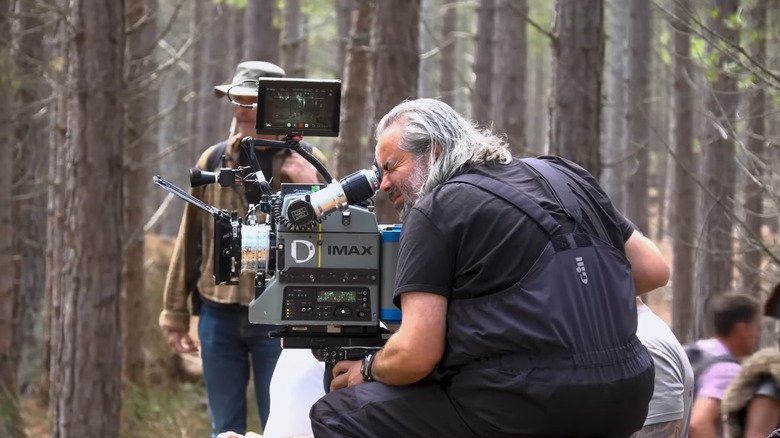
You’re also not looking at the same picture enlarged. Films shot on IMAX’s cameras capture a larger image to begin with, so the frame contains information a conventional camera never recorded.
Directors have to plan for a screen that changes shape
Nolan, the director of The Odyssey, told the Associated Press that the expanded view creates real problems to solve on set. “We have to plan very carefully because by shooting an IMAX film, you capture a lot of information,” he said. “Your movie is going to translate very well to all the formats because you’re getting the ultimate amount of visual information. But there are different shapes to the screen . . .What you have to plan is how you then frame your imagery so that it can be presented in different theaters with equal success.”
Digital shoots aren’t exempt. Framing for IMAX’s dual aspect ratios isn’t a matter of zooming out and cropping in post. Lenses, lighting and sound architecture all get adjusted so the footage works in both IMAX and non-IMAX houses. Films branded “Filmed for IMAX” go further and work with the exhibitor through production, and IMAX supplies its own tools, including digital remastering software, to clean up images for a screen this size.
Not every IMAX logo means the same thing
Odds are your nearest IMAX is digital, and that covers a wide quality range. The most common is IMAX Digital, frequently a retrofitted auditorium inside a Cinemark, Dolby, AMC or Regal. Those dual xenon lamp projectors hit the 1:90:1 aspect ratio but don’t match the resolution of IMAX’s other systems.
Then there are the laser projectors, and here’s where the branding gets slippery. Laser GT uses two 4K projectors and reaches the floor-to-ceiling ratios IMAX is known for, with better resolution and a wider color palette. Other IMAX theaters run a single laser projector and top out at 1:90:1. Single laser still beats xenon on contrast and brightness, so it’s an upgrade, just not the one the logo implies.
The 70mm print weighs 500 pounds and cost $80,000
Large-format film isn’t new. Stanley Kubrick shot 2001: A Space Odyssey on 70mm decades ago. What IMAX changed was orientation: the film runs horizontally through the projector rather than vertically, and the process repeats three times over, pushing the perforations at the edge of each frame from the standard five to 15.
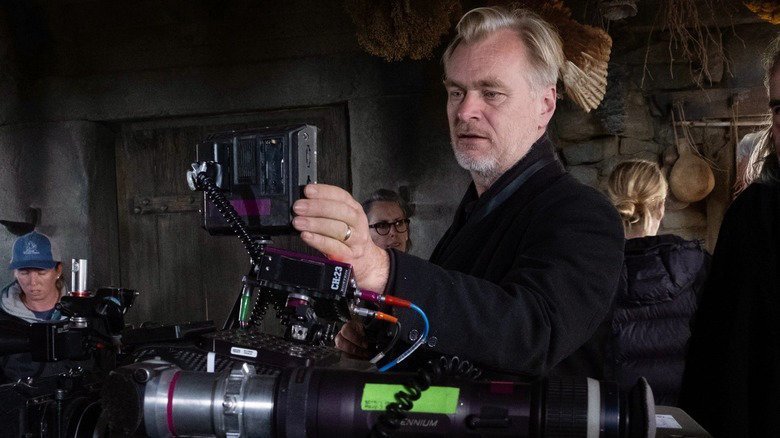
The practical result is absurd. The reels for The Odyssey run over 10 miles long, weigh roughly 500 pounds and move through the projector at hundreds of miles an hour. Each of Nolan’s 70mm prints reportedly cost $80,000.
Nolan has called the format’s sharpness and clarity “unparalleled” and described it as the “best that celluloid film ever got.” He credits “its massive film negative,” which he described as “a huge roll of film that runs through the projector at hundreds of miles an hour.” Because IMAX uses an emulsion to process the image, more surface area means a better picture. The company claims its 70mm prints are 10 times clearer than a traditional 35mm projector, roughly the equivalent of 18,000 pixels per frame.
Seeing the difference is harder than reading about it
Aspect ratio comparisons don’t land as numbers. The Odyssey’s official website hosts a tool that plays the trailer across the different formats, and that side-by-side does more work than any spec sheet.
IMAX had its best year while the box office had a bad one
In 2025, overall ticket sales stagnated at $8.9 billion, roughly $2.5 billion under the pre-pandemic high of $11.4 billion. IMAX, meanwhile, posted the best year in its history, with sales up roughly 40 percent year over year.

2026 is following the same split. Premium format hits like Spider-Man: Brand New Day and The Odyssey have the American box office on pace for its strongest year since 2019, even though theaters are reportedly selling roughly two-thirds of the tickets. Viewers are already reserving IMAX seats for Dune: Part 3, which doesn’t premiere until December.
The explanation isn’t one thing. Big-budget, visually loaded spectacle is exactly what IMAX auditoriums were built for, and those are the films still pulling crowds. Rising ticket and concession prices have also turned any night at the movies into a splurge. If you’re only going four or five times a year, spending that budget on the premium screening starts to look like the rational choice.
How to find one that’s worth the drive
Use IMAX’s online search tool before you buy. It lists the theaters nearest you, their amenities and, critically, their film format, which is the only way to know whether you’re getting Laser GT, a single laser projector or a retrofitted xenon room with an IMAX sign over the door.
Check that format field first. The difference between the best IMAX ticket and the worst one is larger than the difference between a bad IMAX ticket and the standard screen down the hall, and both of them will charge you a premium.