

Two things ruin a good Netflix binge. A season that suddenly goes downhill, and a cancellation nobody warned you about.
Stranger Things declined sharply after season 3. The OA ended on a huge cliffhanger. Even when a show recovers, the lull messes with the whole experience, and you spend episodes doing homework to get back to the part you liked.
These nine don’t do that to you. You can breeze through all of them without it ever feeling like work.

Start with the German one everybody told you about
Dark earns the reputation. Created by Baran bo Odar and Jantje Friese, it runs three seasons and 26 episodes, and it opens with four families in a small German town looking into the disappearance of a local child.
The trail leads somewhere nobody expects: a time-travel conspiracy stretching back and forward across several generations.
What makes it hold is how the stakes swell season by season, from a simple missing-person case to potentially world-ending consequences, without the show ever losing track of the humanity of its characters. That’s a rare trick. Most sci-fi trades one for the other.
Pantheon puts tech CEOs in the villain seat
Pantheon premiered on AMC before moving to Prime Video for its second and final season, and it’s set in a world where two rival technology companies, Logorhythms and Alliance Telecom, are cracking the science of uploading minds into a virtual world.
Three leads, three different angles on the same nightmare. Maddie Kim (Katie Chang) is a bullied teenager who learns her dead father isn’t dead, just uploaded by Logorhythms. Caspian Keyes (Paul Dano) is a 17-year-old computer genius who finds out his entire life was staged by Logorhythms for a specific purpose. Vinod Chanda (Raza Jaffrey) is an engineer uploaded by Alliance Telecom against his will, now living inside the virtual world.
The virtual-versus-real contrast will remind you of The Matrix (official site). But the antagonists here land closer to home. The bad guys aren’t machines, they’re ruthless, uncaring CEOs with zero regard for the people they hurt in the name of discovery.
It’s also a visual marvel when it leans into the mind-bending world the uploaded characters live in, and across 16 tightly crafted episodes it never forgets the real-world stakes.
One body, four centuries, eight episodes
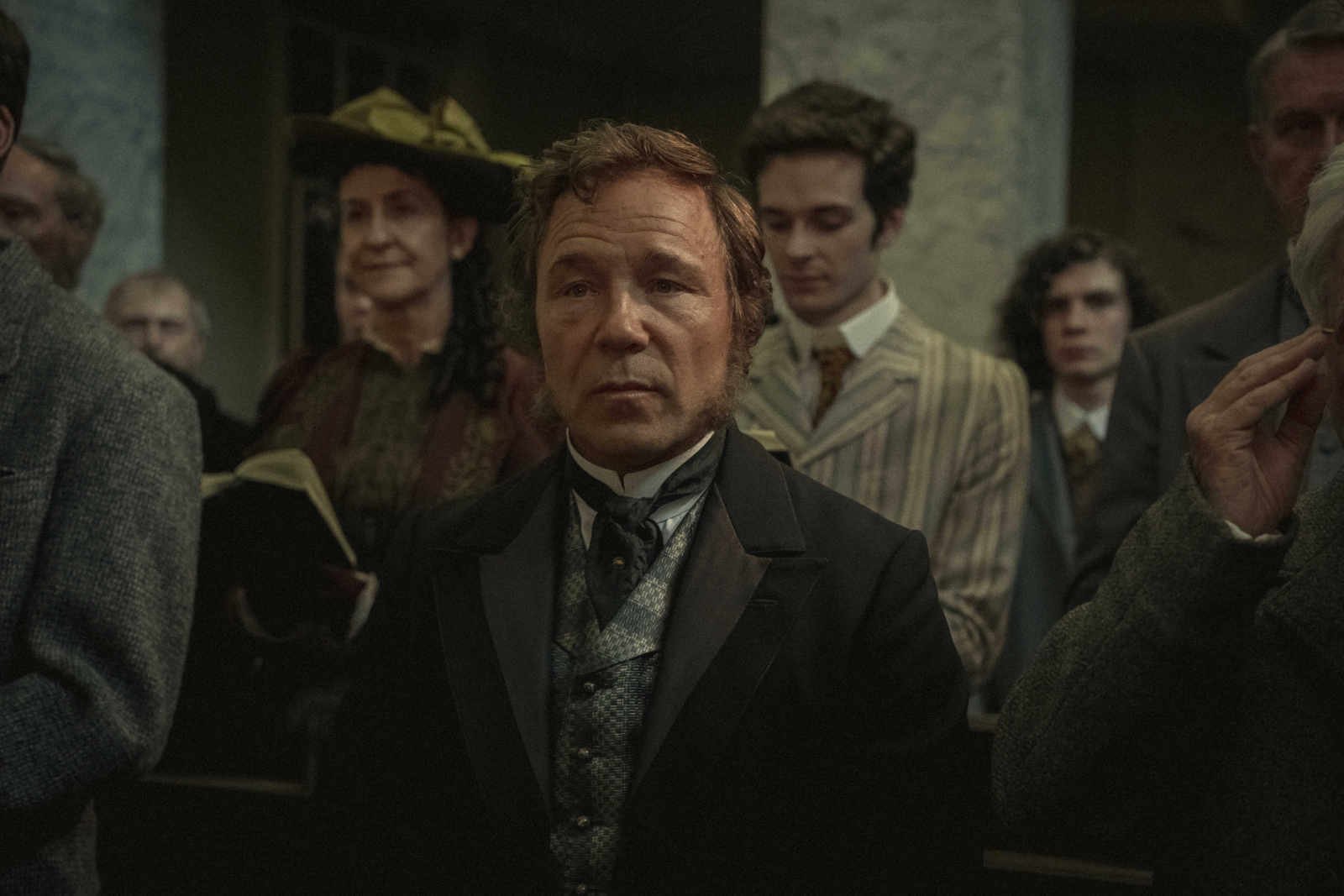
Bodies, based on a DC graphic novel by Si Spencer, has the best concept on this list. The same dead body turns up in the same spot in London in 1890, 1941, 2023 and 2053.
Four investigations, four eras, and eventually they start braiding together.
It’s time travel crossed with noir detective work, and it does ask for your attention across those eight episodes because the storyline gets dense. Stick with it. The payoff justifies the premise.
Stephen King sends James Franco after JFK
11.22.63 is an eight-episode miniseries about a time traveler trying to stop the assassination of President John F. Kennedy. Jake Epping (James Franco) is an ordinary English teacher handed the mission, and he botches it in all the human ways, chiefly by getting too attached to the people he meets back there.
Classic sci-fi machinery bolted onto one of the most familiar moments in American history gives every character a foreboding edge you can’t shake.
The best idea in it is Jake’s growing sense that time itself is “pushing back” on what he’s doing, as if the thing that’s coming is supposed to come and the whole mission is hopeless.
Maniac is weird on purpose, and it works
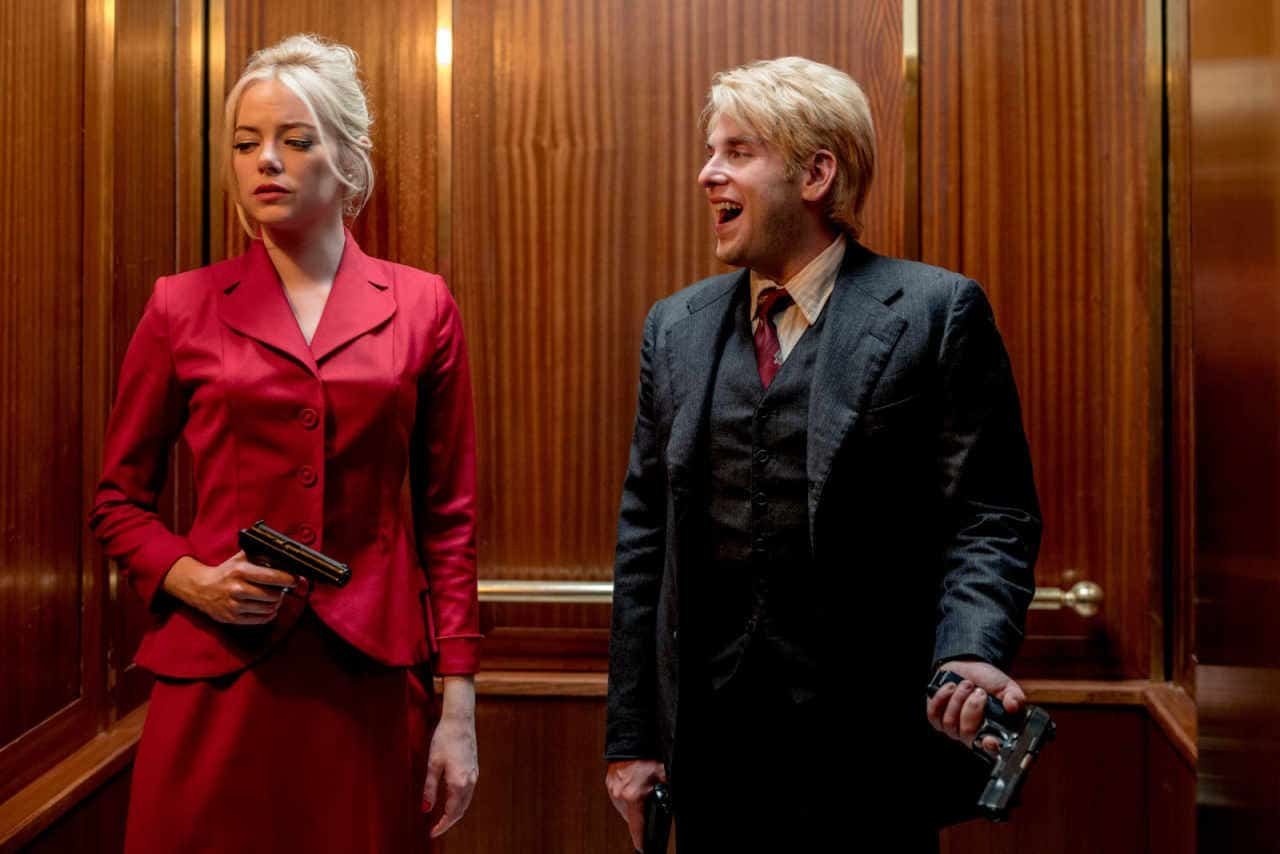
Created by Patrick Somerville (The Leftovers) and based on a Norwegian series from 2015, Maniac follows two strangers with severe mental disorders, played by Jonah Hill and Emma Stone, who both sign up for a medical trial of an experimental treatment that promises to cure everything.
Ten episodes cover three days of that drug trial, during which the two of them keep landing in fantasies, sometimes shared. In one they’re a married couple. In another, Stone’s character is starring in an elf fantasy epic.
Trippy as it is, the whole thing is about self-acceptance, and that’s what makes it stick.
The smart home was invented in the 1970s and it wants to talk
Cassandra is a tech thriller with a completely different temperature. The German horror series moves a family into the very first smart home, built in the 1970s, where the AI features sit dormant until the tech-savvy son switches the system on.
Up comes Cassandra, a robot woman styled straight out of the era. Her behavior turns stranger and more manipulative, and the family works out that she’s a lot more than a handy house appliance.
Benjamin Gutsche’s six-episode series plants its seeds methodically and takes its time doing it, then cashes them in with revelations and results that are genuinely horrifying.
Two live-action Ticks, both funny, one better
Netflix has both live-action Tick series right now and neither one has a dud stretch. The Tick is a big, dumb superhero with super strength and near-invulnerability. Arthur is his weak, cowardly, thoroughly average sidekick, whose moth-themed flying suit reads more like a bunny.
The superhero parody started as a comic book in the late 1980s. (Technically he was a newsletter mascot first, then got his own comic.) Then came the very clever 1990s cartoon, and then the two live-action shows.
The first stars Seinfeld‘s Patrick Warburton as the Big Blue Bug of Justice, and it’s a sharply written, sitcom-shaped series built mostly around the downtime between adventures, The Tick parked in a diner with Arthur and the rest of the superhero crowd. Fox canceled it after nine episodes. It’s a hidden gem, largely because Warburton was born for the role.
The second began on Amazon in 2016 and ran two seasons and 22 episodes, and it’s the better one. This time the focus shifts to Arthur (Griffin Newman), who gets built out into a three-dimensional person with real issues and insecurities. The Tick (Peter Serafinowicz) is still the same big dumb blue guy accidentally destroying things because he has no idea how strong he is.
Watch both if you can. If you’re only picking one, take the second, since each of its seasons tells a consistent, funny story with a lot of heart.
Yes, the Jurassic World kids’ show is good
I had low expectations for a Netflix kids’ show set inside one of my favorite movie franchises. Then I watched it.
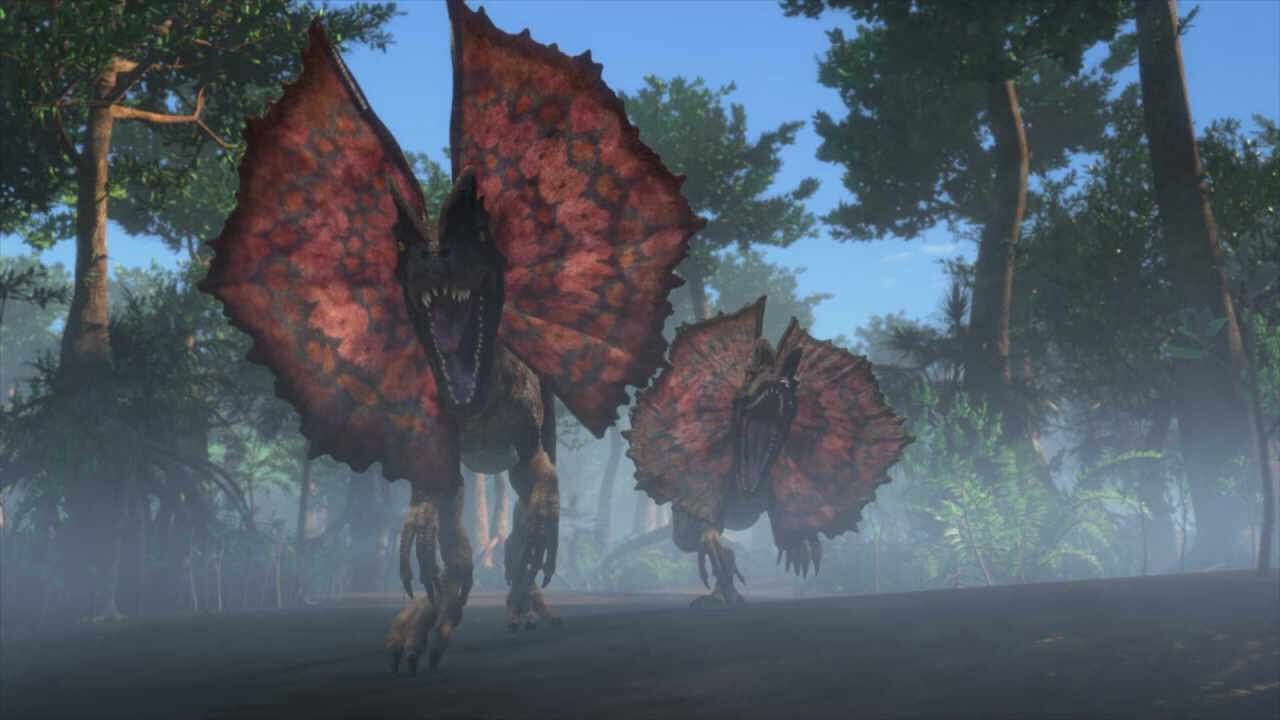
Jurassic World: Camp Cretaceous drops a group of kids on Isla Nublar during the events of Jurassic World and well past them. They’re at a camp on the island when the dinosaurs start getting out, and the two counselors responsible for them end up forced onto an evacuation boat while the kids stay behind. Survive, then find a way off.
The impressive part is how carefully it fits into existing Jurassic Park and Jurassic World lore. Henry Wu (BD Wong) turns heel in the newer movies and they never really dig into it. Camp Cretaceous does, and it becomes one of the show’s best recurring threads.
It also hands screen time to species the films ignored, like Ankylosaurus and Carnotaurus. Five seasons, 50 episodes, consistent the whole way. It’s better than a few of the Jurassic movies, and I’m not joking.
And then there’s Alan Tudyk
Tudyk voiced K-2SO in Rogue One: A Star Wars Story and flew the ship as Wash on Firefly, and he spends all four seasons and 44 episodes of Resident Alien cashing in that goodwill.
The premise: an alien is sent to Earth to wipe out humanity for the planet’s own good. He crash-lands in Colorado instead, killing a local doctor, then takes the dead man’s identity while he figures out how to finish the job.
Somewhere in there, wearing another man’s face in a small mountain town, he starts wondering whether killing the humans is the right thing to do at all.