

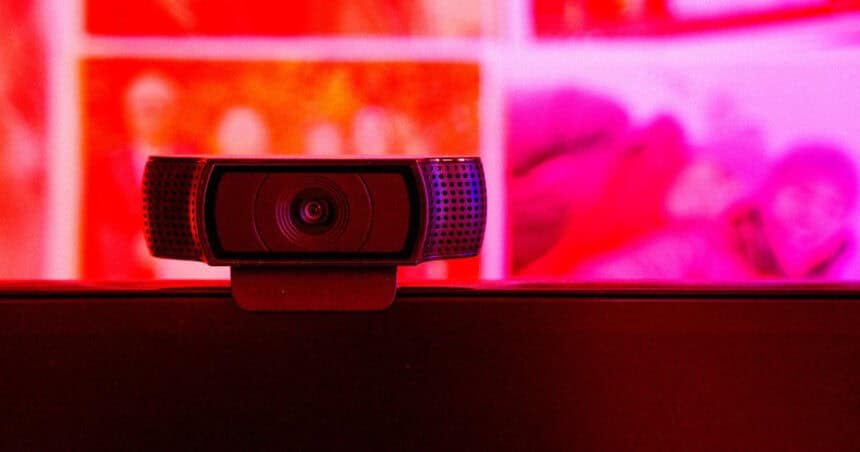
Google wants a video of your face. And this week it started asking for it on its own home page.
The prompt sits at the bottom of the screen, nudging you to “sign in with a selfie,” with “don’t set up” and “set up selfie” as your two choices. It’s optional. But the fact that the biggest search engine on the planet is now putting facial recognition in front of billions of visitors, unprompted, is the part worth paying attention to.
Google first announced the feature in July, pitching it as a fallback for when you’re locked out of your account or don’t have your usual devices on hand. Setup is quick: you record a short clip of your face while turning your head so the camera catches different angles. Then, if “you’re having trouble signing in later on,” Google said in the announcement, “you just take another selfie to get back into your account.”

What’s changed is the promotion. A recovery option buried in account settings is one thing. A home page banner is another.
It’s doing more than checking you’re the account owner
Read the fine print on the setup page and the selfie’s job description gets longer. A disclaimer says the video will also determine whether you’re “old enough to use certain Google services.” So the same clip that unlocks your account is being used to estimate your age.
There’s a second opt-in labeled “improve Google services.” Tick that and you’re letting the company use your video selfies to “improve our facial recognition, age estimation, and other verification methods that use your physical features or movement, across Google services.” That’s your face and how you move it, feeding models that run across the whole company, not just the login screen.
Why handing over your face is different from handing over your search history
Google already holds troves of behavioral data on its billions of users. It uses that to tune search results and sell targeted ads. Adding a mathematical map of your face to that pile concentrates a lot of your personhood with one company, and unlike a password, you can’t rotate your face when something leaks.
Then there’s the spoofing question. AI deepfake tools keep getting more convincing and easier to get hold of, and it’s uncertain how well a facial recognition scan will stand up to a determined attempt to fake it. A recovery method that’s supposed to be your last line of defense is a strange place to bet on unproven biometrics.
For now the honest advice is the boring one. The “don’t set up” button works, and nothing in Google’s announcement suggests you lose anything by pressing it.