
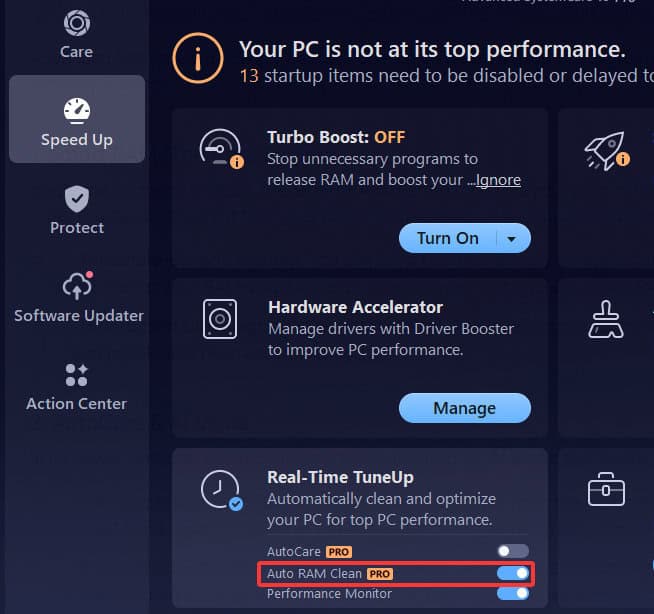
If your Windows PC stutters or freezes for a second when you open a new app or browser tab, apps you ran earlier may still be holding on to RAM they no longer need. A lightweight RAM cleaner app can release that memory with one click, without closing anything you have open. You can also set it to run on its own so you don’t have to think about it again.
Why Windows runs low on RAM after a while
RAM is the fast memory your programs run in. It’s not the storage where your files live. Running low on it doesn’t always mean your PC doesn’t have enough, and a machine with 16GB can still freeze briefly when you open a new tab in Chrome.
Open Task Manager at any point and you’ll probably see Memory sitting around 50 to 60% full. There are three reasons for this:

- Background services and your own apps. Windows runs many services in the background, and you likely have a few apps open too. This part is normal.
- Superfetch. This Windows feature preloads the apps you use most so they open faster when you click them.
- Apps that don’t let go. Apps you ran earlier can keep holding the RAM they were given, which leaves less for everything else.
Windows doesn’t cap how much RAM an app can use. That’s good for speed while you’re using the app, but if the memory isn’t released when you close it, the apps in front of you get less to work with.
If you leave your PC on all the time or only put it to Sleep, Windows won’t free that allocated memory for you. Used memory isn’t bad in itself, since unused RAM does nothing. It becomes a problem when a memory leak (an app keeping memory it should have handed back) starts causing stutters and micro-freezes. You’re more likely to notice this if you have 8GB of RAM or less, or if you play games.
Free RAM with a memory cleaner app
The easiest fix is a RAM cleaner app. Plenty are free. Pick a lightweight one that won’t push a premium plan or use a lot of memory itself, because that defeats the point. WinMemoryCleaner by Igor Mundstein and Memory Cleaner by Koshy John both work well and both use a function built into Windows, but any app you trust will do.
Both of those apps passed a virus scan when this was checked. Still, scan anything you download from the internet before you run it.
- Download the RAM cleaner app you’ve chosen.
- Scan the downloaded file for viruses.
- Move the EXE file somewhere easy to reach, such as your desktop.
- Open the app.
- Click Optimize, or whatever the equivalent button is called in your app.
- Watch the memory indicator as your RAM is freed in real time.
This won’t close any of the apps you currently have open.
Set WinMemoryCleaner to free RAM on its own
WinMemoryCleaner has extra options that let it work in the background. A useful setup, especially for gaming, is to have it start with Windows and clean memory automatically when free RAM drops low.
- Open WinMemoryCleaner.
- Turn on the option to run it on startup.
- Set it to free memory when available memory is below 15%.
Once it’s set up, you won’t need to open the app again.
When a RAM cleaner helps and when it doesn’t
These apps don’t make your memory faster or “optimize” it in any lasting way. They give you a quick way to fix memory leaks when apps don’t release the memory they were given.
A typical case: you spend a few hours working in Chrome, then start a game and notice micro-stutters and freezes. One click on Optimize can clear up that kind of slowdown right away.
Keep in mind that Task Manager’s numbers aren’t always accurate, so a high memory figure there doesn’t always mean something is wrong. Use the cleaner when you actually feel the slowdown.
Frequently asked questions
Why is my RAM 50 to 60% full when I’m not doing anything?
Windows runs background services, Superfetch preloads the apps you use most, and apps you closed earlier may still be holding memory. The first two are normal.
Will a RAM cleaner close my open apps?
No. Clicking Optimize frees memory without closing any of the apps you have open.
Does Windows free up RAM when my PC goes to sleep?
No. If you leave your PC on or only put it to sleep, Windows won’t automatically free memory that apps are holding.
Do I need a RAM cleaner if I have 16GB of RAM?
It can still help. Even with 16GB, memory that apps don’t release can cause brief freezes, though stutters are more common on PCs with 8GB or less and during gaming.