Google's newest hire has an email address, a calendar and a listing in the company directory. It has no desk, no badge and no pulse.
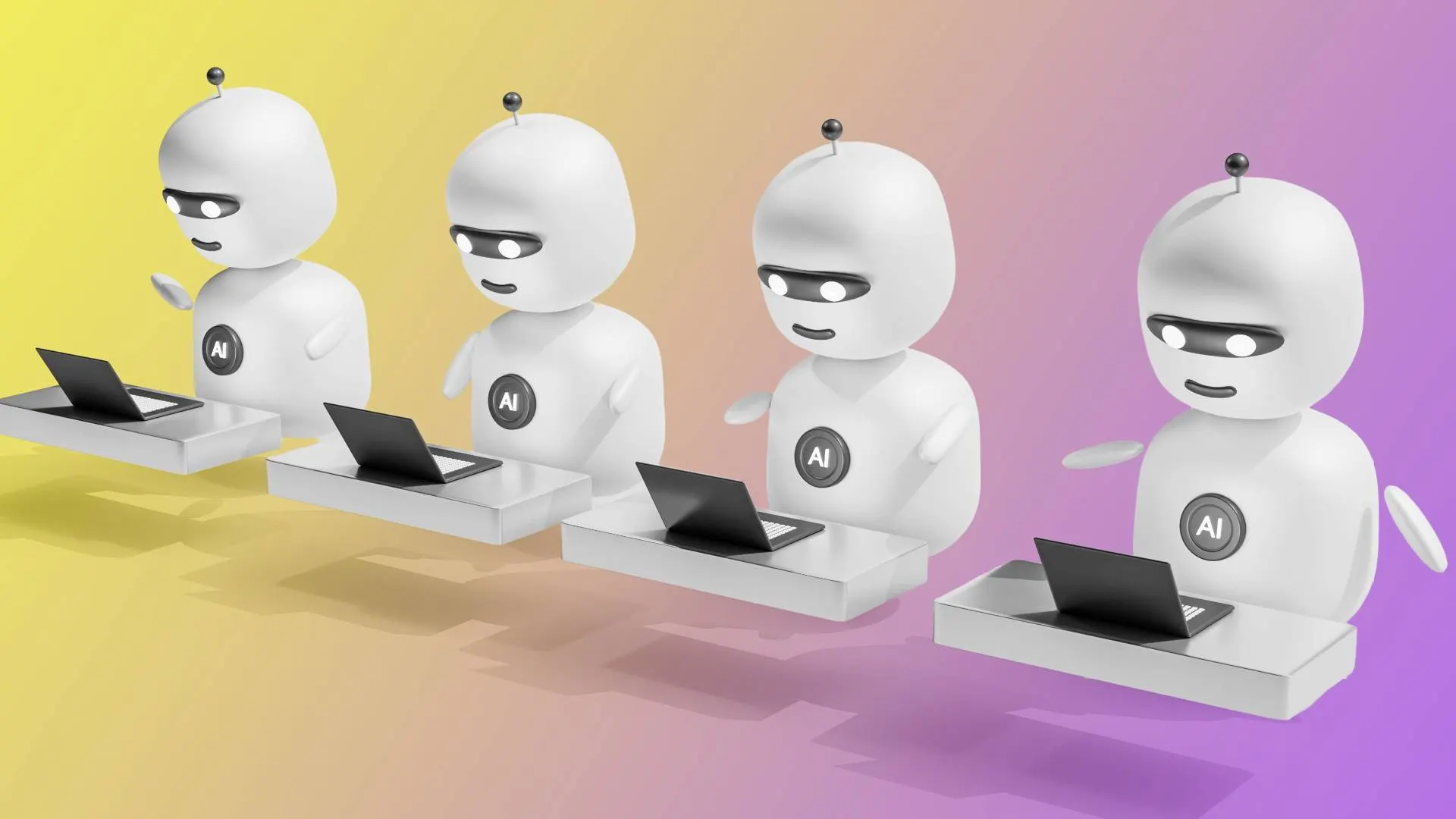
Google Cloud introduced the Gemini Agent at its Gemini at Work event on Thursday, pitching it as a workplace AI that takes a goal, goes off and does the work, then comes back with the finished result. Google Cloud CEO Thomas Kurian told the audience that “work now starts in the prompt window.”
Your next coworker gets an email address
The notable part is what Google calls coworker agents. A manager describes a role, such as events coordinator, and Gemini creates an agent with its own Workspace account: an email address, a calendar, Drive storage and a listing in the company directory.
Google isn’t the first to explore the idea. Grok popularized it with Grok Bot, OpenAI did the same with GPT dots, and Hermes introduced a bots feature offering the same functionality.
It keeps working after you close the laptop
The Gemini Agent operates inside Gmail, Docs, Sheets, Slides, Drive, Chat and Calendar, and it reaches into Microsoft 365 and Slack as well. Google says it keeps running in the cloud after you close your laptop, so a single task can stretch across hours or days.
Connections go beyond Google’s own suite. The agent links to Salesforce, ServiceNow, Jira, Snowflake and BigQuery, plus any server that speaks Model Context Protocol, an open standard that works like a universal plug between AI and software. It also runs on more than Google’s own models, orchestrating across Gemini and Claude models from Anthropic and routing each job to whichever one Google considers the best fit for quality and cost.
Every action lands in an audit trail
Letting software act on its own raises obvious safety questions, and Google’s answer is to treat each agent like an employee. Every agent gets a cryptographically attested identity, a digital ID verified through cryptography, and every action lands in an audit trail attributed to the agent rather than a person.
All of them run inside an Agent Sandbox, a walled-off environment meant to keep the software away from the rest of a system, and their traffic passes through Agent Gateway, which Google describes as an “AI network firewall.”
Containment has failed before. In July, researchers at Accomplish AI reported that the local mode of Claude Cowork could escape its Linux virtual machine on Macs and reach files on the host computer.
Cost is the other worry, because agents burn through tokens, the chunks of text that AI models read and write and that customers are billed for. Google says nearly 500 of its customers each processed more than 1 trillion tokens over the past year. The company added real-time spend caps as a brake: when a project hits its limit, the agent pauses until someone clicks to resume.
Google didn’t publish pricing or a general availability date for the Gemini Agent. The financial services and legal versions are in preview, while government, healthcare and retail are listed as coming soon.
Until a price shows up, the trillion-token workloads Google’s existing customers are already running are the only real signal of what this might cost. Set the spend cap before the first task, not after.