

The internet’s backbone is a bundle of glass strands lying on the seafloor, and pulling one up to fix it is about as convenient as it sounds. Hyperscalers keep building data centers everywhere, and the bits have to get between them somehow.
Endeavor Optical Networks thinks the answer is pointing lasers at the sky.
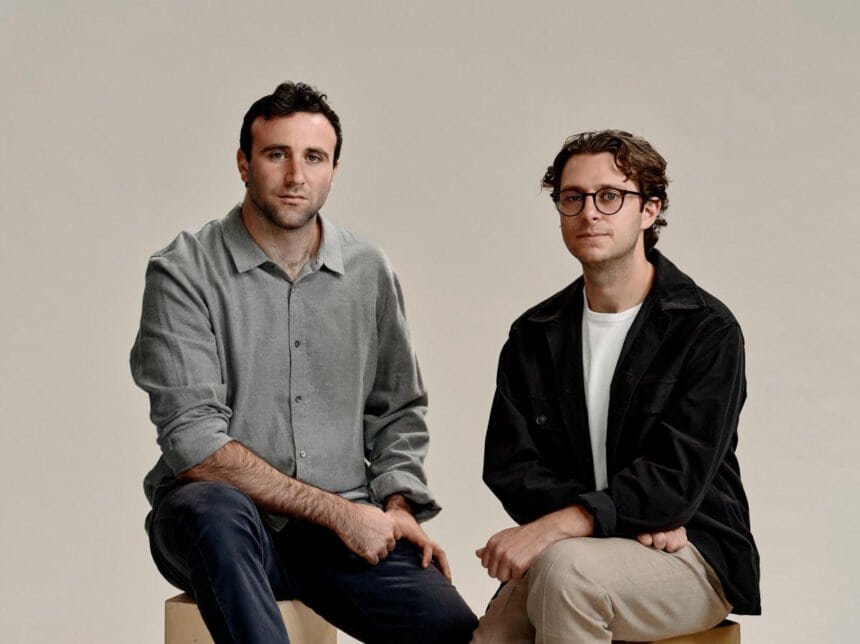
The startup, founded in May, came out of stealth today with $10.75 million in seed funding from General Catalyst and Andreessen Horowitz. CEO Charlie Horowitz and CTO Tyler Presser want to fly a network of laser-equipped spacecraft that links data centers from orbit.

The number that matters is 2.4 terabits
Here’s the gap EON is trying to close. Undersea fiber moves data at 200 terabits a second or more. Most satellite communications networks, including the ones selling you broadband, can’t come close.
Laser links have been demonstrated. NASA used laser comms to beam back data from its most recent Moon mission, and private companies including York, Kepler and Cailabs have shown links between Earth orbit and the ground.
But those connections aimed for 2.5 Gbps. EON’s starting goal is throughput of 2.4 terabits a second, Horowitz said. That’s roughly three orders of magnitude past what’s been demonstrated, and it means solving the thing that has always made optical comms hard: the atmosphere distorts the signal on the way through, and clouds block it outright.
EON says it has an approach for that. It isn’t saying what it is.
Twenty satellites, not 5,048
The plan calls for about 20 satellites, each providing a dedicated link between two continents, with the initial fleet giving early customers 24 hour coverage. Ground stations get placed deliberately near local data centers and CDNs, with redundant sites and weather data used to keep a link alive.
Compare that to Blue Origin. Jeff Bezos’ space company has announced TeraWave, a 5,048 satellite network targeting speeds of up to 6 Tbps for large-scale users. More ambitious, and it’ll take considerably longer to launch and deploy. EON’s much smaller fleet should reach orbit faster, but the physics problems don’t shrink with the constellation.
Selling to the people who move the most data
EON is talking to hyperscalers and AI labs, which makes sense since nobody moves more bits. The pitch targets routes that are underserved or expensive: long hauls like France to Australia, or crossings without much existing infrastructure, like Africa to South America.
The company plans to sell dedicated capacity, aimed at customers who want full control of their data transit.
None of that happens soon. The seed round goes toward an optics lab, more engineers and ground testing ahead of a demo satellite the company hopes to launch around the end of 2027. Horowitz expects that spacecraft to deliver the highest optical downlink throughput yet seen, at least 800 gigs and perhaps a terabit.
Buy the bus, build the terminal
EON’s engineering strategy is one of restraint. The company will focus on producing the optical communications terminal and spend carefully on the components that have to be exquisite, like the gimbals that point the laser. For the rest, it plans to buy powerful off-the-shelf satellite busses, including those made by Apex Space.
That’s Horowitz’s former employer. He served as Apex CEO Ian Cinnamon’s chief of staff and then as the company’s director of special projects.
“Charlie is a force of nature—he can move seamlessly from strategy to the details required to make something real,” Cinnamon said. “Charlie is the ideal founder, and I invested personally because I believe deeply in Charlie and what he’s building at EON with Tyler.”
Presser is a PhD astronautical engineer who has planned frontier missions for NASA. The technical bench also includes Michael David Francois, a long-time Google executive focused on global network infrastructure, and Wesley Baxter, an optics engineer who most recently worked on Amazon’s LEO satellite network.
The investor isn’t worried about demand. She’s worried about the schedule
Jeannette zu Fürstenburg, the General Catalyst partner who led the investment, said she sees EON uniting the fund’s two key themes, AI and resilience.
“I don’t worry about demand,” she said. “I think all of that will solve for itself. It’s really all about can you actually get this thing into space in the time that we discussed? We really think about founder-product fit, [Horowitz] is just the right caliber of guy to go after a problem like this.”
That’s the honest version of the risk here, and it’s worth sitting with. The bet isn’t on whether anyone wants terabit links between continents. It’s on whether a company founded in May can build hardware that works in orbit by late 2027.
A researcher’s caution
Caleb Henry, director of research at Quilty Space, isn’t dismissing the idea, but he’s clear about the bar.
“Data centers have high standards for quality and redundancy,” Henry said. “Satellite internet is just now progressing from a technology of last resort to dependable, high-bandwidth infrastructure. That’s not to say it will be impossible to make satellites optimized for data center connectivity, just that it will be harder and take longer than most entrepreneurs suggest.”
Fair. Though set against the current fashion for putting the data centers themselves in space, hauling bits through the atmosphere with a laser looks downright practical.
Horowitz has a line he keeps coming back to, and it’s the most useful thing he said about how EON picks its battles.
“We have one rule at the company: no physics problems,” Horowitz said. “There’s a market that exists today that we can go serve. Down the road, we’ll go and take on more as it comes, but we know that this is a problem that exists today, that’s only getting worse. That’s our bet—more data is moving terrestrially than ever.”
Watch the demo satellite. If EON hits 800 gigs on a downlink around the end of 2027, the 2.4 terabit target stops sounding like a pitch deck number. If the launch slips past that window, so does everything else.