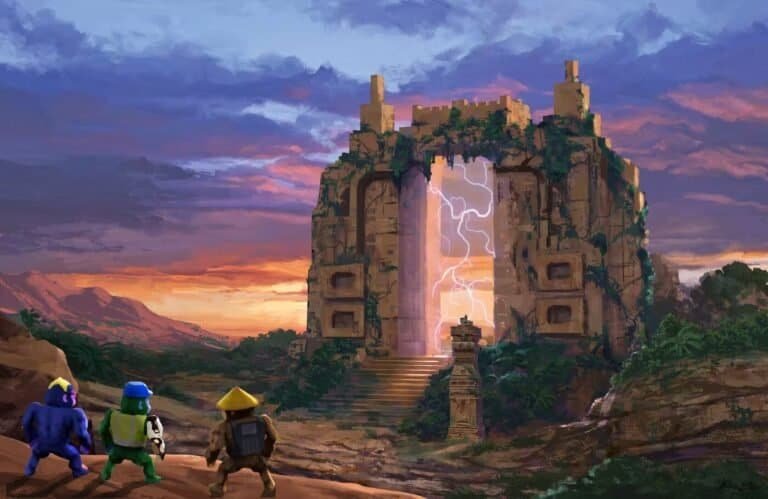
Shardbound is a multiplayer collectible tactics game — a card game played out on a board, where position matters as much as the cards in hand. It is set in the lush Axis islands, floating above the earth's core, and follows a quest to preserve the bonds of the Lifeweave and uncover the secrets of the Shards. It is free to play and opened to everyone on the Epic Games Store in June 2024.
Players craft decks and then use them to take control of the board, which is what separates Shardbound from a pure card duel: units occupy space, and outwitting an opponent means out-positioning them as well as out-drawing them. Matches are fast and deliberately unpredictable, and the developers lean into comebacks — snatching victory from the jaws of defeat is a stated design goal rather than an accident. Weekly events such as The Floating Isles run a gauntlet format with their own rewards, and in-game events like the Community Bot Battle give players something to do outside ranked play.
Cards are collected and traded, and the collection is the progression: new cards mean new strategies rather than higher numbers. The game bills itself as free to play, free to reign — the ladder is open to anyone, and the studio publishes news, patches and event announcements openly for the players it calls Rangers.
Shardbound is a turn-based tactical card game — closer to a board-game-style skirmish than a straight deck duel — with its collectible layer registered on Immutable X. You build a deck, then play it out on a grid where positioning and turn order matter as much as the cards themselves, which is what separates it from the hand-versus-hand format most crypto card games settle for.
What works is the pairing of that tactical layer with genuine ownership: cards live on a chain built for game assets, so trading them carries none of the fee weight that sinks NFT trading on general-purpose networks. The art direction and the multiple modes give the collection some reason to exist beyond speculation.
What does not work is how little the public record says about the current state of play. There is no named developer attached to the listing, and the pitch leans on "transparency and security" — blockchain boilerplate that tells you nothing about balance, matchmaking depth, or how alive the player base is. For a competitive game, an unverifiable population is the risk that matters.
It is for players who already like tactics games and want their collection to be tradable — not for anyone expecting the chain itself to be the entertainment.
This is our own editorial assessment. We do not score games — ratings come from players.
Shardbound
Based on 0 reviews
Played Shardbound? Tell other players what it is actually like.
No category ratings yet — be the first to rate.
No reviews yet. Be the first to review this game!
5 official channels available.
Picked by what these games actually share — genre, chain and platform — with the rarer traits counting for more. Not by how popular they are.
Know something we got wrong? Change the fields below. Your edit is reviewed by our editors before it goes live — usually within a day.
Our editors check every suggestion before it goes live. If you left an email, we will tell you when it is approved.