
In Brief:
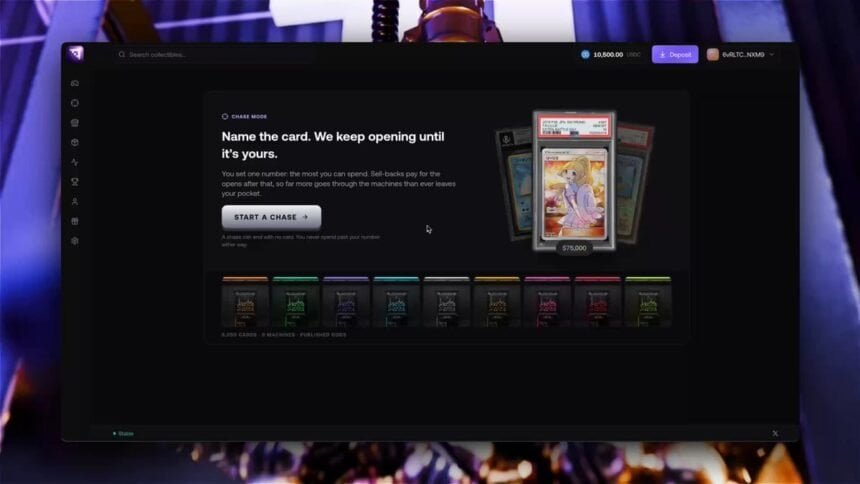
- Glyde launched Chase Mode, a pack-opening format that keeps ripping until the user pulls the card they picked. It’s live at collect.glyde.gg/chase.
- Glyde settles pulls on-chain in USDC on Base. Winners can sell a card back for instant cash or redeem the physical graded slab.
- The launch post carried no pricing, no odds and no cap on how many packs a single run can consume, in a category where rivals publish pull rates on the pack page.
Glyde switched on Chase Mode, a format that keeps opening packs until the buyer hits the card they selected. The company announced the launch in a post on X and directed users to collect.glyde.gg/chase.
“What if the packs didn’t stop ripping until you pulled the card you wanted?” Glyde said in the post. “Chase Mode is LIVE.”

What if the packs didn’t stop ripping until you pulled the card you wanted?
Chase Mode is LIVE: http://collect.glyde.gg/chase@GlydeView on X ↗
That’s the entire public description so far. The post didn’t state a price per run, publish pull rates, or say whether there’s a ceiling on how many packs a chase can burn through before it stops.
How Glyde works
Glyde runs a claw-pull mechanic rather than a straight pack simulation. Users pull to win a real card already sitting in a vault, then choose between selling it back for cash or redeeming the physical graded slab through a Glyde wallet.
Pulls settle on-chain in USDC on Base.
Chase Mode changes the unit of purchase. Instead of buying one pull and taking the outcome, a user names a target and the platform keeps ripping against it. The economics of that depend entirely on what a run costs and what the odds are on the named card, neither of which Glyde disclosed at launch.
The category already sets a disclosure bar
Digital pack-ripping has consolidated around a handful of operators, and most of them post their terms in public.
Tilt Rips prices every pack at 100% expected value, meaning each card’s value multiplied by its odds sums to the pack price, with the odds listed on the pack page. Any individual pack can land above or below that. Tilt buys pulls back at 90% of live market value and offers free vaulting, marketplace listing or physical redemption.
Beezie runs the closest analogue to Glyde’s claw. Its items are graded, authenticated and vaulted at Brink’s, sell back for up to 90% of market value, and ship to more than 150 countries. Beezie advertises transparent odds.
Courtyard holds cards graded by PSA, CGC and BGS in climate-controlled custody and guarantees a buyback at 90% of fair market value, with free storage and no marketplace fees.
Rips by Triumph tiers its packs from roughly $1 to $1,000, with comparable odds across tiers and higher-value cards inside the expensive ones. It collects tax information once a user clears $600 in annual card sales and pauses withdrawals until the forms are filed.
Fee structures vary. One 2026 marketplace survey flagged a platform charging 6% on instant sellback while using internal odds with no public verification tool, and another taking about 4% in platform fees plus 2% for redemption shipping.
Age gating and the virtual-goods framing
Operators in the space lean on similar legal language. Ripz, which sells Pokémon TCG packs at MSRP with provably fair pulls, requires buyers to be 18 or older and states that all purchases are for virtual goods with no real-world monetary value.
Collector Crypt takes a different route, tokenizing physical Pokémon slabs on Solana one-to-one and providing liquidity through a buyback priced at a discount to market.
The name isn’t new
Chase Mode already exists elsewhere. PokéGurus runs a feature under the same name where users select their chase card or cards, rip virtual packs, and keep the chase if they hit it. Every rip there also returns 10 bulk cards regardless of outcome.
PokéGurus is explicit about the math its version uses. The rates are built to sit close to the real set’s odds, the site said, but they aren’t a perfect 1:1 copy and are slightly better overall.