


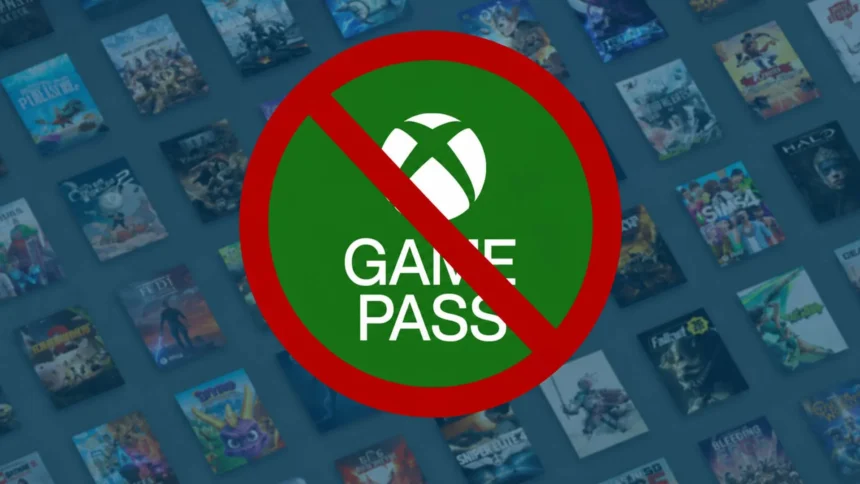
Microsoft is in the middle of the biggest restructuring in Xbox history. Layoffs. Canceled games. Studios walking out the door. And according to one of the people who helped build a Microsoft blockbuster, all of it traces back to a single number that never showed up.
Mike Brown, the former creative director of Forza Horizon 5, thinks he knows why the walls are shaking. Speaking to MinnMax, he tied the whole mess to one thing: Game Pass never hit the goals the company was counting on.
His argument is blunt. Microsoft poured money into the subscription model, bought up teams, funded new titles and created jobs, all in service of one promise. Keep the pipeline full. Keep new games landing in front of subscribers, month after month.

The catch, Brown said, is that the math never closed. Not enough people signed up at the prices the plan required to make the business hold together.
A fortune spent chasing a number that didn’t come
Brown didn’t soften it.
“They really invested a fortune in the idea of Game Pass as a service. That led to acquiring many teams, funding games and creating jobs. The reality, though, is that not enough people signed up at the prices that were needed for the business to be viable,” he said.
Read that back and the shape of the last two years starts to make sense. Every studio Microsoft absorbed, every project it greenlit, every headcount it added was a bet on subscribers arriving in volume. When they didn’t, the spending had nowhere to sit.
Brown still thinks the idea was right
Here’s the part that clearly stings for him. Brown doesn’t think Game Pass was a cynical play. He thinks it started as a genuinely good, player-friendly idea, one that helped bring games into existence that probably wouldn’t have made it otherwise, and put more variety in front of people at a lower price.
That’s what makes the fallout feel worse to him, not better.
“The idea of Game Pass was good. To have an affordable subscription, to get games to more people and to create titles that maybe couldn’t exist otherwise. If more players had signed up, the model would work. Unfortunately, that didn’t happen,” he said.
The pitch was affordable access for players and a wider shot for developers. The bill came due anyway. And the people paying it now are the ones who packed up their desks.









![How to find what's eating your Windows storage [2026]](https://cryptogames.gg/wp-content/uploads/2026/09/how-to-find-whats-eating-your-windows-storage-2026-150x150.jpg "How to find what's eating your Windows storage [2026]")