


In Brief:
- Epic Games unveiled Unreal Engine 6, the first significant update in six years, emphasizing interoperability of cosmetic items across games.
- Fortnite will be the primary testing ground, allowing players to use cosmetics in both Fortnite and other developers’ titles.
- The rollout is expected in Early Access by late 2027, with full release anticipated by 2028 or 2029.
Epic announces Unreal Engine 6 with cross-game cosmetics
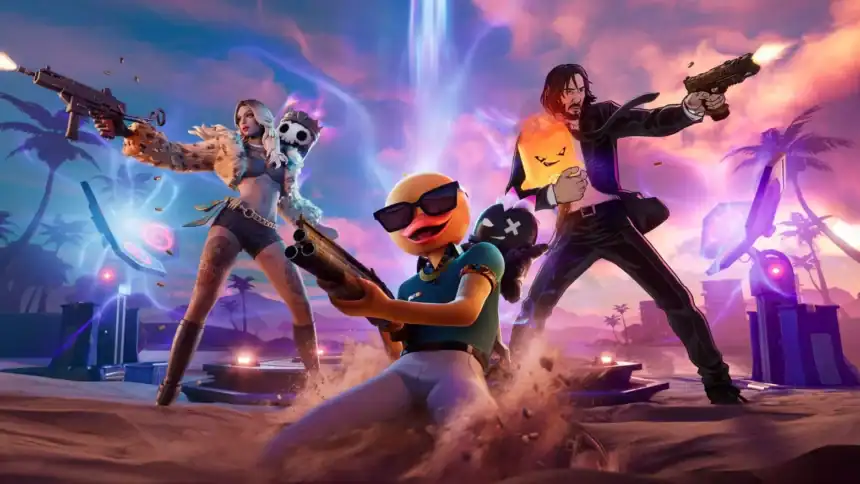
Back in 2018, Enjin had an idea of creating the multiverse; 8 years later, Epic Games introduced Unreal Engine 6 during its State of Unreal address at Unreal Fest in Chicago. This update allows players to transfer cosmetic items between different games, starting with Fortnite.
The system will enable players to use their owned Fortnite outfits within other games and vice versa. Epic development lead Marcus Wassmer described this move as the “first real proof point of portability” in gaming. By implementing this feature, Epic aims to respect player purchases while showcasing the technology’s capacity and complexity.
Shared economy for assets
Epic is promoting a concept of a shared economy for “smart assets.” These items can function across various titles and are not confined to a single game. The studio argues this system validates players’ investments in time and money, letting value transfer across experiences.

CEO Tim Sweeney outlined a vision where developers could create once and distribute widely, spanning console stores and mobile platforms. Under this model, players’ owned items would retain value across multiple titles rather than being isolated in one ecosystem.
Technical underpinnings
Unreal Engine 6 consolidates Unreal Engine 5 and Unreal Editor for Fortnite into a single, cohesive engine. Sweeney summarized this integration as essentially combining UE5 with UEFN, with added capabilities.
At its core, the engine features Verse, Epic’s programming language designed for large online worlds. Verse allows for global state management and can roll back transactions when necessary. Epic has indicated this language is crucial for enabling interoperability across games, marking a shift from traditional programming languages.
AI integration
The presentation highlighted AI tools, including a Model Context Protocol plugin, which connects the engine with various developer models. Epic is expanding its Epic Developer Assistant to streamline tasks like level assembly and character setups.
While some developers have expressed skepticism about potential impacts on craftsmanship, Epic has clarified that these AI tools are optional. The focus is on speeding up workflows without replacing human creativity.
Fortnite’s role
Fortnite plays a vital role in the Unreal Engine 6 strategy, acting not only as the testing ground for cosmetic portability but also as a validation environment for the new technology. The game is already operating on Unreal Engine 6, allowing Epic to test real-world applications continuously.
Epic has opened Fortnite to third-party creations, reinforcing its shift towards becoming a distribution and social hub. Cross-game cosmetic portability aligns with this approach, enabling creators to operate outside Fortnite’s traditional limits.
Challenges ahead
Several questions remain as Epic continues to develop Unreal Engine 6. The company has not disclosed which specific partner games will adopt the Fortnite cosmetic carryover feature. Implementation will depend on developers’ decisions to integrate the engine’s capabilities.
Current ownership rules stipulate that Fortnite items are linked to a player’s Epic Games account and can’t be transferred between accounts, a policy still enforced.
Timeline for release
Epic targets an Early Access launch for Unreal Engine 6 by late 2027, with the full version coming in 2028 or 2029. Given the extensive nature of the project, delays are possible.
Players can expect that, one day, the outfits and items they have already purchased may become usable in a broader array of games beyond Fortnite, marking a significant shift in digital asset utility.











[…] races for :-Heightened $eth Jackpot Prize Pool and Win Odds-Dungeon Keys to use in @LootSurvivor –Winnable Skins-Pooling creator […]