

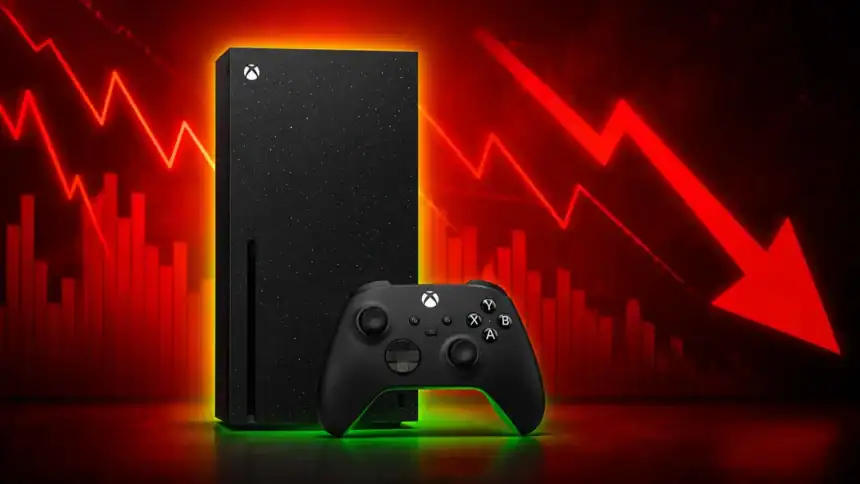
Xbox added more than 200 million new players in fiscal year 2026. It also lost $1.7 billion in revenue. Both of those things are true, and Microsoft would very much like you to focus on the first one.
The numbers come from the company’s Form 10-K filing with the SEC, which is where the optimism stops and the arithmetic starts. Total Xbox revenue fell 7% year over year. Content and services dropped 5%. Hardware fell 29%, driven by lower console sales.
That hardware figure is the one worth sitting with. Nearly a third of the business, gone in 12 months.

Xbox CEO Asha Sharma didn’t dodge the gap. She said more than 200 million new players came to the company’s ecosystem and its games during FY26, then acknowledged that the audience growth never turned into business growth.
The audience showed up. The money didn’t follow.
Her framing was direct: the company needs to invest in what players actually value. Which is a polite way of saying the current strategy is pulling people in and then failing to keep hold of them in any way that shows up on a balance sheet.
“In FY26, over 200 million new players came to XBOX and our games, but our business did not grow with our audience. We need to close that gap by investing in what players value. That will take time, but we expect to return to growth by the end of FY27,” Sharma said.
Note the timeline. Not next quarter. Not next holiday. The end of FY27.
Nadella wants changes across the board
Microsoft CEO Satya Nadella has been blunt about what getting there requires. He said significant changes are needed to the content, the platform and the broader operation of the gaming division.
That’s three separate pillars of the business, all flagged at once. When the person running the entire company lists your content, your platform and how you operate as areas needing significant change, there isn’t much left that isn’t on the table.
The return-to-growth target for the end of FY27 is now the official goal, and it’s the number every future Xbox announcement will get measured against.
What the split actually tells you
The 5% dip in content and services and the 29% collapse in hardware are telling different stories. Software and subscriptions are wobbling. The console business is falling off a cliff.
Add the 200 million new players to that and the shape of the problem gets clearer. People are turning up. They’re playing. They just aren’t buying boxes, and whatever they’re spending elsewhere isn’t covering the difference.
Microsoft’s own words for it were that the business did not grow with the audience. That’s an unusually candid line to put in front of investors, and it’s the most useful sentence in the whole filing.
The gap is the whole story
Every recovery plan Microsoft has floated points at the same thing: the distance between how many people play Xbox games and how much Xbox earns. Sharma called it a gap. Nadella called it a reason to change the content, the platform and the operation.
They’re describing the same hole from two directions.
So here’s where Xbox stands. Two hundred million new arrivals, $1.7 billion less in the till, a 29% hardware drop, and an 18-month clock that Microsoft started itself.
Sharma already said the quiet part out loud: that will take time.