

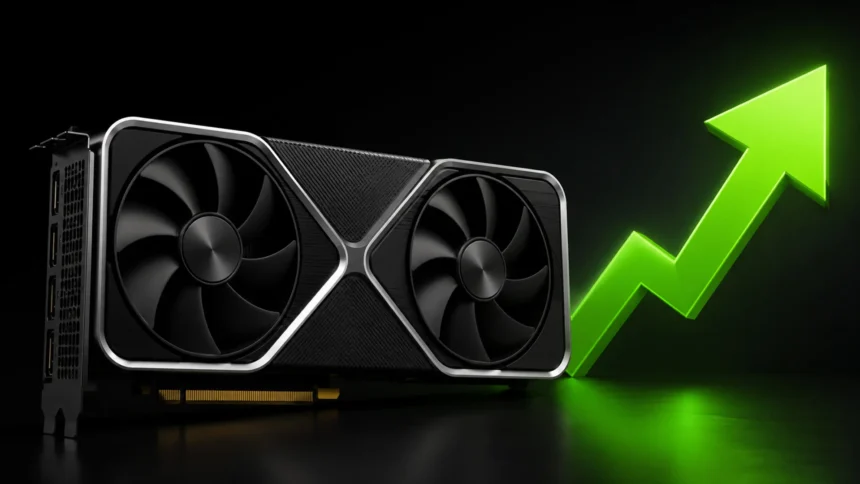
The price hike coming for your next GPU has nothing to do with the chip that does the actual rendering. It’s the memory soldered next to it.
New reports say Nvidia has already told its board partners, the companies like ASUS, MSI and GIGABYTE that build their own versions of RTX cards, that it’s raising prices on the GPU kits it sells them. And when the parts get more expensive, so does the card you eventually buy.
Here’s the part worth understanding if you’ve never bought a custom card before. Nvidia doesn’t just hand partners a chip and walk away. It supplies the parts those third-party companies need to assemble the custom versions you see on store shelves. Those parts are the ones getting more expensive.

Why RAM is dragging GPUs up with it
The cause won’t surprise anyone who’s priced out a memory upgrade lately. RAM prices have been climbing for a while now, and they’ve climbed hard. Graphics cards lean on their own dedicated memory, and that memory comes from the same strained supply.
The increases are expected to hit cards using GDDR6 and GDDR7 memory specifically. That’s the pairing driving the whole story.
Which cards get hit
The reporting points to the RTX 5000 series as the group in the crosshairs, since those cards ride on GDDR7. But it’s not just the newest hardware. The recent GeForce RTX 3060 is on the list too, because it still uses the older GDDR6 technology.
So this isn’t a next-gen-only problem. An older card that’s still selling gets swept in on the same memory math.
The entry-level squeeze
There’s a knock-on effect that could matter more than the sticker numbers. As Tweaktown writes, higher costs for components, including cooling systems and boards, may push manufacturers to build fewer affordable entry-level cards and concentrate on pricier premium models instead.
Read that again if you’re shopping on a budget. When the margins on cheap cards thin out, the cheap cards are the first thing partners quietly stop making.
What’s actually confirmed
Not much, and that’s worth saying plainly. For now everything is up in the air, and it remains to be seen whether the price increase actually holds. Nvidia has reportedly warned its partners, but a warning to board makers isn’t the same as a new price tag in your cart.
If you’ve been sitting on a GPU purchase waiting for a deal, this is the signal to stop waiting. The direction of travel is up, and the cheapest cards are the ones most exposed. Buy the one you want before the entry-level tier gets thinner.
Source: Benchlife, VideoCardz, Tweaktown

![3 apps Facebook just copied to stop you leaving [2026]](https://cryptogames.gg/wp-content/uploads/2026/07/3-apps-facebook-just-copied-to-stop-you-leaving-2026-150x150.jpg "3 apps Facebook just copied to stop you leaving [2026]")