
In Brief:
- Grand Arena Season 2 launches in October on Ronin, replacing Season 1’s daily fantasy-manager lineups with a portfolio of tokenized Moki shares that pay out from weekly reward pools.
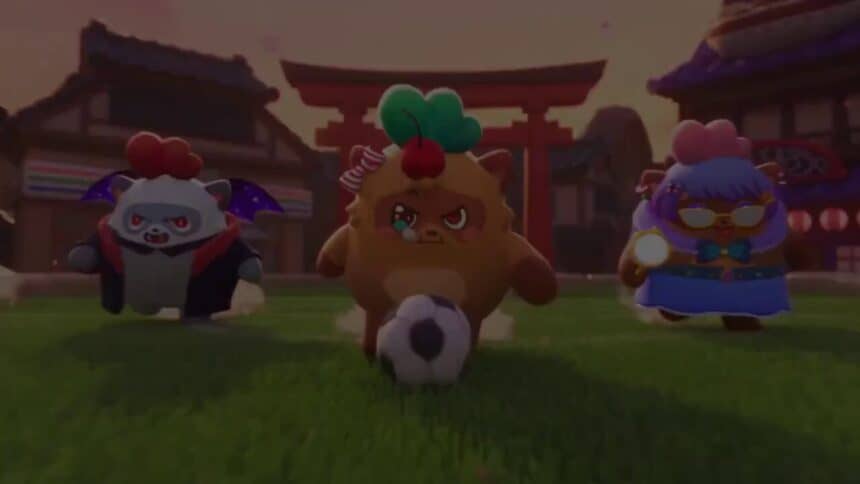
- AI Mokis play Moki Ball, a 3v3 soccer game, on their own, with each Moki’s trained stats deciding how it performs.
- The season runs about four weeks, lowers some fees and sends a portion of Grand Arena revenue toward buying Schiffy.
Grand Arena Season 2 kicks off in October with a format that asks players to hold shares of Champion Mokis and collect from weekly reward pools rather than manage lineups every day, Ronin said on X.
The matches themselves run without player input. AI Mokis compete in Moki Ball, a 3v3 soccer game, and the stats a Moki has been trained on shape how it plays.

Grand Arena S2 is becoming more passive and portfolio-focused.
Open packs, collect shares of Champion Mokis, build your portfolio, and earn from weekly reward pools based on performance.
Have you been training your Moki?@RoninView on X ↗
“Grand Arena S2 is becoming more passive and portfolio-focused,” Ronin’s account said. “Open packs, collect shares of Champion Mokis, build your portfolio, and earn from weekly reward pools based on performance.”
What changes from Season 1
Season 1 followed a card-collecting fantasy model. Players bought packs from the Grand Arena Shop or picked up individual cards on Ronin Market, assembled lineups from their collections and competed in daily and weekly contests. More cards meant more mXP and more lineup options.
Season 2 drops the daily grind. Players assemble a portfolio of Moki shares and take a cut of the weekly pools tied to how those Mokis perform on the pitch. The change moves Grand Arena closer to an asset-management game than a fantasy manager.
Champion Mokis sit at the centre of the design. They’re special Moki NFTs featured on Grand Arena cards, and Ronin has said owning one gives the holder extra earnings from royalties.
Most Season 1 champions carry forward, so returning players don’t start from zero.
Season length, fees and Schiffy
Moku revealed the new mechanics on Sept. 9. The season will last around four weeks, pay out weekly and lower some fees.
A portion of Grand Arena revenue will go toward purchasing Schiffy, the partner token Moku had earlier pledged to weave into its ecosystem. Moku hasn’t stated what Grand Arena’s revenue is, so the size of that buying isn’t known. One of Moku’s five upcoming games is being developed for Schiffy.
A presale of Season 2 packs runs ahead of launch, giving players a window to build positions before the first weekly pool opens.
Part of a five-game slate
Grand Arena Season 2 is the second of five Moku releases scheduled across roughly six months. Nomgar shipped on Sept. 14. Super Battle Moki follows in November, then Break, a Beyblade-inspired battle-top title pencilled in for late 2026 or early 2027, and an Action RPG planned for 2027.
Moku laid out the full slate in a thread following a Mokiside Chat community call, covering Nomgar, Grand Arena S2, Super Battle Moki, Break and the Schiffy game and alpha.
The studio introduced bRON in April 2026, a bonded RON token pegged 1:1 to RON that stays inside the Moku ecosystem rather than trading freely.
Background
Grand Arena opened with a four-week preseason before Season 1 went live, with Ronin running a Moku Guild Boost program alongside the first season.
Ronin has been pushing Champion Mokis on its marketplace since before Season 2 was announced. “If you’re looking to buy Moki NFTs, make sure to keep an eye out for these Champion Mokis,” the network’s account said in an earlier post.
Ronin’s teaser for the new season closed with a single question: “Have you been training your Moki?”