
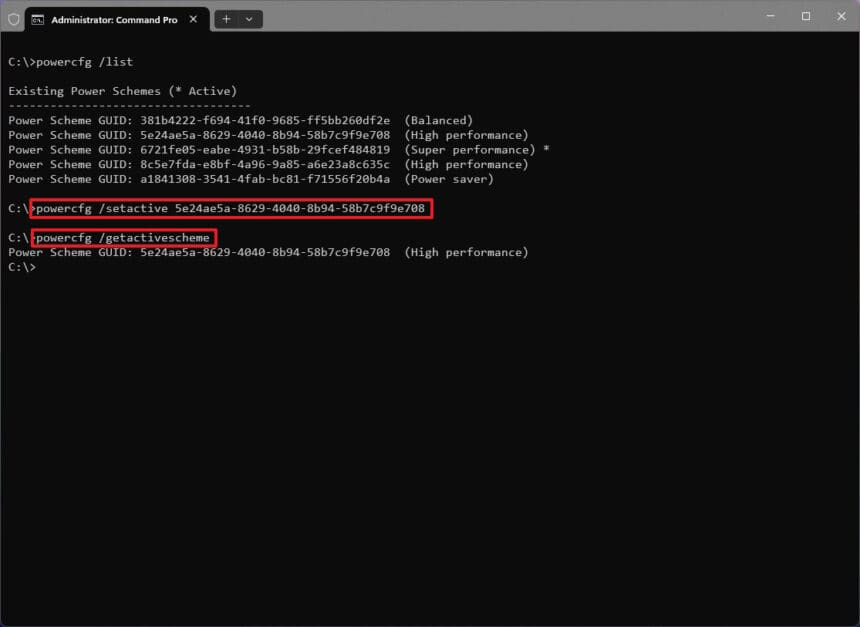
If your Windows laptop’s battery is draining faster than usual and Task Manager shows nothing obvious, run powercfg /energy. The command watches your system for 60 seconds while it sits idle. It then writes an HTML report that lists errors, warnings and information about your power plan, USB devices, timer requests and CPU-heavy processes, so you can see what’s keeping your hardware awake.
Why Task Manager doesn’t always show the cause
Task Manager is good at catching an app that’s hammering the CPU. Many power problems happen lower down, where it can’t show them.
Some common examples:

- A USB device that won’t power down
- An app that keeps asking Windows for a high-resolution system timer (a faster internal clock that stops the processor from resting)
- A power plan set up so your hardware runs harder than it needs to
The powercfg /energy diagnostic is built to catch these. It runs a trace (a short recording of system activity) and checks Windows for common energy-efficiency and battery-life problems.
Run the powercfg /energy report
Close your apps and documents before you start. Microsoft recommends running the trace while the PC is idle, and the difference is large. In one test, a first run with apps open showed average CPU utilization of 45.95%, and a download manager alone accounted for 27.02%. After closing unneeded apps and running it again, average CPU utilization dropped to 3.67% and the warning count fell from 22 to 11.
- Close the apps and documents you don’t need.
- Open Terminal as administrator.
- Run this command:
powercfg /energy /output "$env:USERPROFILE\energy-report.html" - Leave the PC alone while the trace runs.
- Read the summary when it finishes. Windows tells you how many errors, warnings and informational entries it found, and where it saved the HTML file.
- Open the report with:
Start-Process "$env:USERPROFILE\energy-report.html"
Give the trace more time
If the problem comes and goes, a 60-second window may miss it. Add /duration to watch for longer. For example, powercfg /energy /duration 120 extends the observation window to two minutes.
Read the report without chasing every red entry
The report sorts its findings into Errors, Warnings and Information. Some entries are easy to understand. Others read like a driver engineer’s debugging notes.
Findings you’re likely to see include:
- The High Performance power plan being active
- A disabled sleep timeout
- Wi-Fi set to maximum performance
- PCI Express power management settings
- USB devices that aren’t entering selective suspend (the low-power state an idle USB device should drop into)
- Programs asking Windows for shorter timer resolutions
- Individual processes that used a large share of the CPU during the trace
The report is specific. A USB warning can include the hardware ID of the device that won’t suspend. A timer warning can name the process asking for a different timer resolution. High CPU usage lists the individual executables, so you don’t have to hunt through Task Manager.
Decide which findings matter
Not every error is a fault. A USB error pointing to USB\VID_2F6E&PID_4E17 turned out to be a Scarlett 2i2 audio interface with an active audio stream. A device that’s playing audio should stay awake, so that entry wasn’t a battery problem at all.
Apply the same judgment to the rest of the report:
- High CPU usage while you’re encoding video means something different from high CPU usage while the laptop sits untouched.
- A long display timeout may be a setting you chose on purpose.
- Some platform-power warnings come from hardware or firmware limits that you can’t fix by changing a Windows setting.
Use the report to shrink your list of suspects. Start with the findings that match the battery or power problem you’re seeing, and look into those first.
Check what’s keeping your PC awake with powercfg /requests
If the energy report suggests an app or device is keeping the machine awake, run:
powercfg /requests
This shows application and driver power requests that can stop the display from turning off or stop the PC from entering a lower-power sleep state. For example, it can show a browser holding a video wake lock and an execution request because it’s playing audio, or a USB audio device with an active audio stream. That context helps explain USB and timer warnings you saw in the energy report.
Follow the trail with other powercfg commands
If you need to dig further, these commands answer narrower questions:
powercfg /lastwaketells you what woke the PC during its most recent sleep transition.powercfg /waketimerslists any active wake timers.Get-PnpDevicein PowerShell can usually turn an unfamiliar USB hardware ID from the report into a device name you recognize.
If one peripheral keeps showing up, Windows can also show you which devices are allowed to wake your PC, so you can narrow that list down.
Use the right report for the right question
powercfg /energy is best for catching inefficient behavior or questionable settings while the system is running. Windows has separate reports for other questions:
powercfg /batteryreportgenerates a battery report with usage and capacity history. Use it when you want to judge the health of the battery itself.powercfg /sleepstudycovers Modern Standby. It helps you find out whether your laptop is actually sleeping and what it was doing while the screen was off.
You don’t need to run /energy every week to clear every red box. It’s most useful when your PC starts behaving differently and the usual battery page in Settings gives you nothing to work with. Let Windows settle for a minute, run the report, and use it to decide where to look next, rather than changing power settings at random.
Frequently asked questions
How long does powercfg /energy take to run?
By default it watches your system for 60 seconds. You can extend that with /duration, for example powercfg /energy /duration 120 for two minutes.
Do I need to fix every error in the energy report?
No. Some entries reflect normal activity, such as an audio device staying awake while it plays sound, and some come from hardware or firmware limits you can’t change in Windows. Focus on findings that match the problem you’re seeing.
How do I check my laptop’s battery health instead?
Run powercfg /batteryreport. It generates a report with your battery’s usage and capacity history.
How can I tell whether my laptop is sleeping properly?
On Modern Standby laptops, run powercfg /sleepstudy to see whether the laptop is sleeping and what it was doing while the screen was off. powercfg /lastwake shows what woke it most recently.