
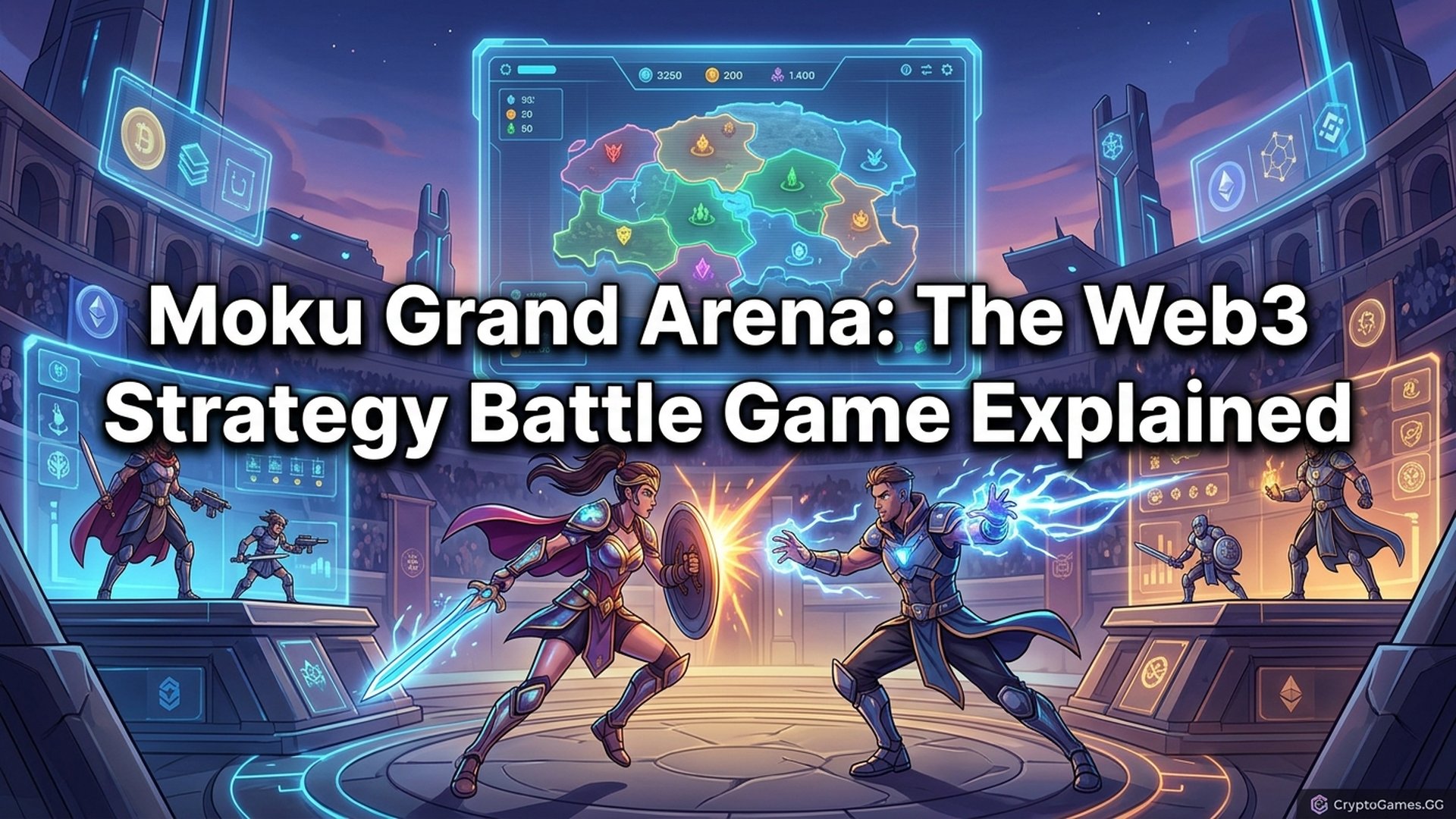


Moku Grand Arena ARENA $0.0000253 ▼ -6% launched in February 2026 on the Ronin Network with a $1 million Season 1 prize pool and a concept genuinely unlike any other blockchain game: 24/7 AI athlete competitions where your collectible Moki NFT cards compete in continuous automated battles while you manage the strategy behind them. It sits at the intersection of daily fantasy sports, collectible card games, and blockchain prediction markets. If that combination sounds interesting rather than confusing, this guide will make it click.
What Is Moku Grand Arena?
Moku Grand Arena is a 24/7 AI-powered fantasy battle game on the Ronin Network. Players collect NFT-based cards featuring Moki characters, build strategic lineups, and compete in daily fantasy-style contests where the outcomes are determined by AI simulations that run continuously, around the clock.
Unlike traditional games that require scheduled play times or depend on real-world sports event calendars, Grand Arena’s AI athletes compete in automated battles that generate live statistics, leaderboard positions, and reward distributions at all hours. This always-on model creates a persistent competitive environment with no downtime, no off-season, and no dependency on external events.
The game targets the intersection of three large markets: the $27 billion daily fantasy sports industry, the $40 billion prediction market sector, and the rapidly growing AI gaming ecosystem. The mechanic of drafting AI athlete lineups and speculating on their simulated performance borrows the best engagement hooks from fantasy sports and applies them to a blockchain-native collectibles framework.
Who Built It and Why They Matter
Moku was founded in 2021 by Hantao and co-founder Bruce. The team started as a Web3 gaming guild, pivoted to infrastructure building, and published early Ronin Network games including Pixels and Apeiron before developing Grand Arena as their flagship product.
The studio is backed by a16z Speedrun, Andreessen Horowitz’s accelerator program for early-stage crypto startups. This backing signals credibility in the institutional crypto world and provides access to capital and advisory resources that most Web3 gaming studios lack.
The technical team includes AI experts from MIT, IBM, and Johns Hopkins, who are responsible for building the AI simulation engine that drives the continuous athlete battles. This is not marketing language. The game’s core differentiator, believable AI athlete behavior that creates genuine prediction uncertainty, requires real machine learning expertise to execute. The institutional AI background on the team is what makes the game’s core mechanic credible rather than a random number generator wearing AI aesthetics.
Moku also claims to have built the largest distribution engine in the Ronin ecosystem, driving over 8 million daily active users across partner launches and more than $7 billion in cumulative fully diluted value through its distribution infrastructure. This reach positions Grand Arena to expand beyond the crypto-native audience into mainstream fantasy sports markets.
Moki NFTs: The Core Collectible
Moki Genesis NFTs are 8,887-supply collectible characters depicting mischievous, shapeshifting tanuki (Japanese raccoon dogs). These NFTs serve as the primary AI competitors in Grand Arena. Each Moki Genesis holder’s character participates in continuous simulated battles, and holders earn royalties when their Mokis are active in competitions.
The Moki collection migrated from Ronin to Ethereum in September 2025, giving it access to the larger Ethereum NFT marketplace ecosystem including OpenSea. As of early 2026, the collection trades at a floor around 450 RON (approximately $200) with active secondary market volume.
A rotating set of 176 Mokis are designated as “Champions” at any given time. Champion Mokis receive elevated visibility in card packs, making them more desirable for competitive lineup building. Champion status rotates based on performance data from the AI battles, meaning high-performing Mokis earn Champion designation through genuine competitive merit rather than arbitrary developer assignment.
Owning a Moki Genesis NFT provides passive royalty income as your character competes in Grand Arena battles. This makes Moki Genesis holders the equivalent of sports team owners in a fantasy sports context: passive participants in the competitive ecosystem rather than active strategic players.
How Gameplay Works: AI Athletes and Daily Contests
Grand Arena operates through a daily fantasy structure adapted for blockchain. Each day, new contests open with specific entry requirements, scoring systems, and prize structures. Players build lineups from their card collections and enter these contests. The AI simulates battles between all entered lineups using the statistical attributes of each player’s chosen cards.
Five cards are the minimum requirement to enter a contest. Each card represents a Moki character with statistical attributes across relevant performance categories. Rarer cards provide scoring bonuses. Special modifier cards called Scheme cards (18 of which were redesigned in the March 2026 update) change point conditions for specific contest types, adding strategic variation across different daily contest formats.
After the contest period closes, the AI simulation results are finalized and the leaderboard rankings are calculated. Prize distributions happen automatically based on final leaderboard position. The top performers across daily leaderboards receive the largest shares of the daily prize pool.
The 24/7 nature means contests run in multiple time zones simultaneously. A player in Europe, Asia, or the Americas can always find an active contest to enter regardless of local time. This accessibility is a deliberate design choice to maximize engagement across a global player base.
Pro Tip: Study the Champion rotation in Grand Arena before building your lineup for high-stakes contests. The 176 rotating Champion Mokis appear more frequently in other players’ card packs, meaning more copies of Champion-tier cards enter competitive lineups. Counter-strategy: identify which Champion Mokis are statistically underperforming their popularity (many players pick them just because they’re Champions), and build lineups that exploit their specific weaknesses through your Scheme card choices.
The FAME and mXP Systems
Grand Arena uses two progression currencies: mXP (Moku Experience Points) and Collector Score. These systems determine your share of weekly and seasonal reward distributions beyond individual contest prizes.
mXP accumulates from contest participation, wins, and specific achievement completions. Your mXP total determines your weekly reward tier. Higher mXP means a larger slice of the weekly distribution pool that operates independently of individual contest outcomes. This creates a dual earning path: win individual contests for their direct prizes, and accumulate mXP for the background weekly distribution regardless of specific contest results.
Collector Score reflects the total quality of your Moki card collection. Higher rarity cards contribute more to your Collector Score. Completing card set collections provides multiplier bonuses. Owning rare Champion Slots (premium positions for specific Moki characters) also boosts Collector Score. The Collector Score determines your base reward tier at season end, creating long-term incentive for collection building beyond immediate contest performance.
How to Earn Rewards
Grand Arena distributes rewards through four channels. Individual contest prizes are the most immediate: finishing in the top percentile of a daily contest earns a direct prize in the contest’s currency (RON tokens, Moki NFTs, or in-game items depending on the contest type).
The weekly mXP distribution allocates a prize pool proportionally to all qualifying participants based on their mXP accumulation during the week. Players who enter the minimum qualifying number of contests each week receive a share of this pool regardless of their individual contest results.
Seasonal ranking prizes distribute at the end of each season to the top overall performers across all season metrics. Season 1 launched with a $1 million total prize pool, making it one of the largest blockchain gaming prize pools at launch for a new title.
Moki Genesis NFT royalties distribute automatically to Moki holders when their characters compete in battles. This passive income layer doesn’t require active daily contest participation and provides ongoing income simply from holding the Genesis NFT collection.
Booster Boxes and Card Packs
Card packs in Grand Arena come in Booster Boxes that contain 30 packs of five cards each. The October 2025 Booster Box sale used a no-loss raffle system: players deposited RON during the raffle period, and non-winning tickets received full refunds while winning tickets received Booster Boxes. This raffle model provided primary sale access fairness while protecting non-winners from financial loss.
8,887 total Booster Boxes are available in the current allocation, with 7,777 distributed through the raffle, 888 through a Second Chance Shop for non-winning ticket holders, and 222 held for the development team and partners. The fixed box supply means card supply from this set cannot expand. Secondary market pricing for Booster Boxes and individual cards reflects this scarcity.
Card rarities range from Common through Champion. Rarer cards provide larger scoring bonuses but appear less frequently in packs. Champion cards featuring the currently designated 176 Champion Mokis are the most desirable for competitive lineup building.
Season 1 Details and Prize Pool
Grand Arena’s Season 1 launched on February 19, 2026, ending the preseason that had been running since mid-November 2025. The season features a $1 million total prize pool distributed across daily contests, weekly mXP distributions, and season-end ranking rewards.
The season structure mirrors traditional fantasy sports seasons: a defined start and end date, progressive leaderboard tracking throughout, and escalating reward values as top performers accumulate advantages. Season-end prizes reward consistent excellence rather than individual lucky performances.
Guild features were announced as upcoming in Season 1, providing collective play incentives where guild members’ performance contributes to shared rewards pools. The Gym system within guilds creates a social hub for strategy sharing and coordinated lineup building, which is the core social feature that distinguishes sustained engagement from solo play.
How to Get Started
Step 1: Visit moku.gg and create an account.
The official website provides the entry point for Grand Arena. Create an account with your email address.
Step 2: Set up a Ronin wallet.
Grand Arena runs on the Ronin Network. Download the Ronin wallet app or browser extension. The Ronin wallet is the same wallet used for Axie Infinity and other Sky Mavis ecosystem games. If you already have a Ronin wallet, skip this step.
Step 3: Acquire some starter cards.
New players can enter low-stakes contests with minimal card holdings. Check the Grand Arena marketplace on moku.gg or secondary markets for current card prices. Start with a basic lineup of five cards to enter your first contest without significant upfront investment.
Step 4: Join the Moku Discord.
The Discord server is where strategy guides, lineup tips, Scheme card analysis, and community discussions happen. Competitive Grand Arena players who don’t follow the Discord miss significant edge in contest preparation.
Step 5: Enter your first contest and track results.
Start with entry-level contests with $1 to $5 entry fees. Experience the AI simulation results, understand how scoring works for your specific lineup composition, and adjust your card selection for subsequent contests based on what the results show about your current collection’s strengths and weaknesses.
See What Is Crypto Gaming for foundational blockchain gaming concepts if this is your first Web3 game. Best Crypto Strategy and Card Games in 2026 compares Grand Arena to the other top strategy games in the category.
Frequently Asked Questions
What is Moku Grand Arena?
Moku Grand Arena is a 24/7 AI-powered fantasy battle game on the Ronin Network where players collect Moki NFT cards and compete in daily fantasy-style contests determined by AI athlete simulations. It combines collectible card mechanics with prediction market dynamics in a blockchain-native format.
How do you earn money in Moku Grand Arena?
Players earn through contest prizes (finishing in top ranking positions), weekly mXP distribution pools (participating consistently), season-end ranking rewards, and Moki Genesis NFT royalties (passive income for NFT holders). Season 1 launched with a $1 million total prize pool.
Is Moku Grand Arena free to play?
Entry requires owning Moki cards, which cost RON tokens to acquire. Low-rarity cards are available at accessible price points on secondary markets. There is no fully free-to-play mode, but starting with minimum card requirements keeps initial costs low at the $5 to $20 range for a minimal competitive lineup.
What blockchain is Moku Grand Arena on?
Grand Arena is built on the Ronin Network, the same blockchain used by Axie Infinity AXS $1.29 ▲ +16.2% and developed by Sky Mavis. The Moki Genesis NFTs migrated to Ethereum in September 2025, meaning Genesis NFT holders interact with Ethereum for NFT ownership but participate in Grand Arena through the Ronin Network.
Conclusion
Moku Grand Arena is the most innovative new blockchain game concept of 2025. The AI athlete mechanic creates something genuinely novel: a game where your strategy is real but the players you’re managing are artificial intelligence entities competing around the clock without your direct involvement. If daily fantasy sports mechanics appeal to you and you’re open to blockchain gaming, Grand Arena’s Season 1 prize pool makes this the best time to get involved before the community grows large enough to compress individual winning opportunities.

[…] and Linea handling assets and liquidity with support from Consensys. This architecture ensures smooth gameplay while anchoring ownership on a separate […]