


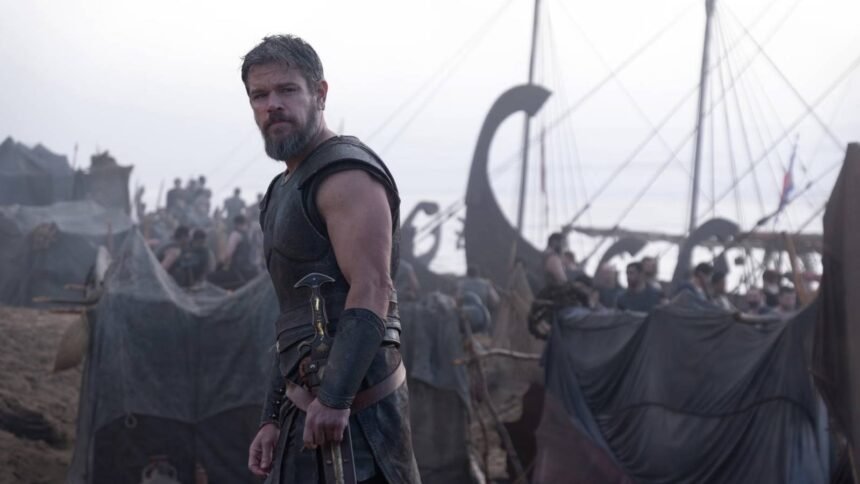
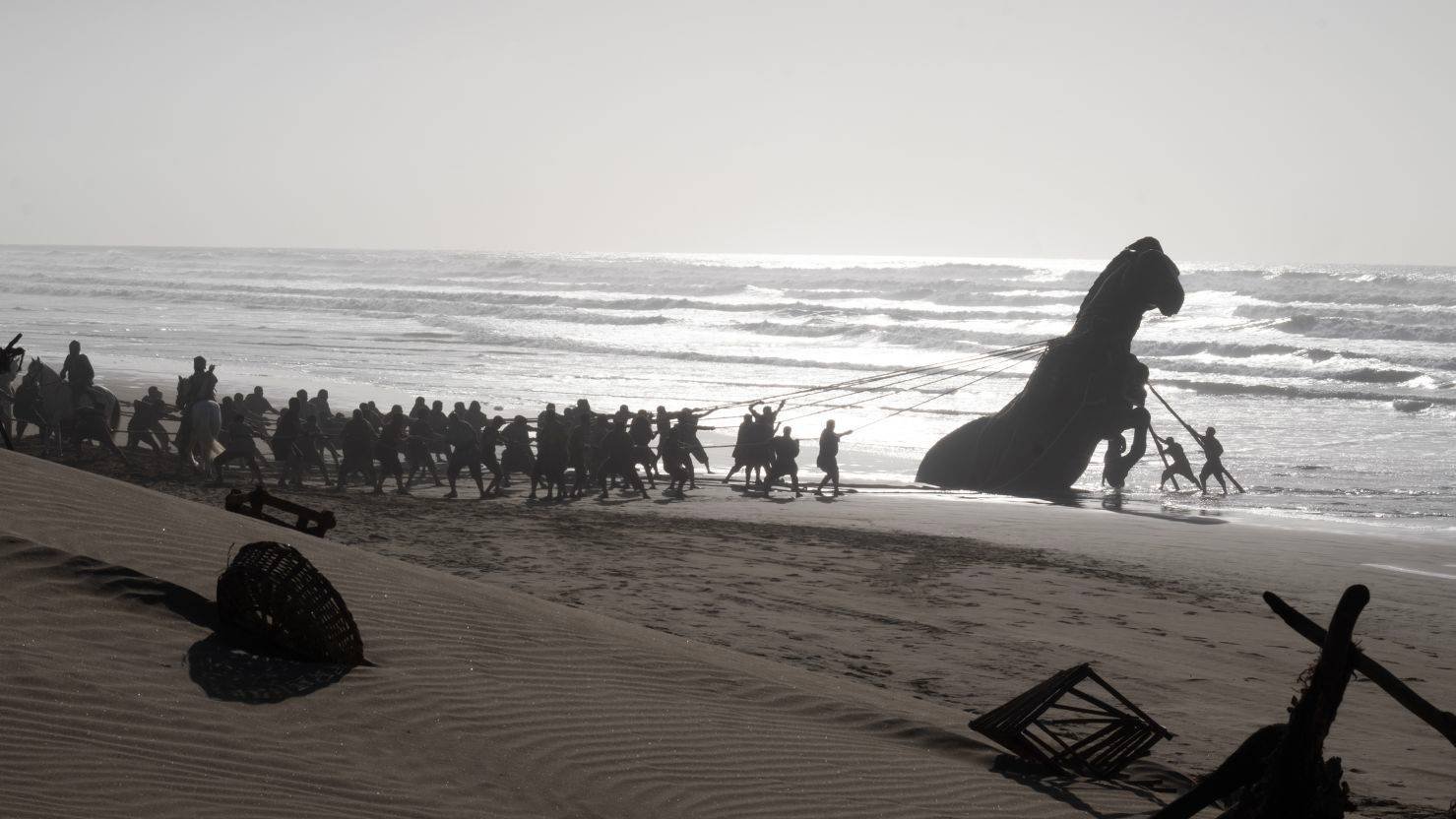
A giant wooden horse, splintered and abandoned, looms over an empty beach as the tide creeps in to take it. That’s the first time you see the Trojan Horse in Christopher Nolan’s The Odyssey, and it’s the image he’s been chasing since 2004.
Nolan didn’t dream it up for this movie. He’d been turning it over in his head for two decades, and the thing that planted it there wasn’t Homer at all.
A shot 20 years in the making
Nolan’s history with Homer starts in 2004, when he was attached to direct Troy. He left to make Batman Begins, and Wolfgang Petersen, who’d been developing a “Batman versus Superman” film, took over Warner’s Iliad adaptation instead.

But the Trojan Horse stuck with him.
“As part of that process I had to work out how I wanted to treat the Trojan Horse,” Nolan said in an interview with the TikTok channel Stepping Through Film. “I was very influenced by seeing The Planet of the Apes (official site) when I was a kid. We had the Statue of Liberty half destroyed. That idea of a fallen monument.”
You can see the whole movie in that sentence. A monument, brought low. A symbol that means one thing until the camera pulls back and it means the opposite.
Why the ape movie is the right reference
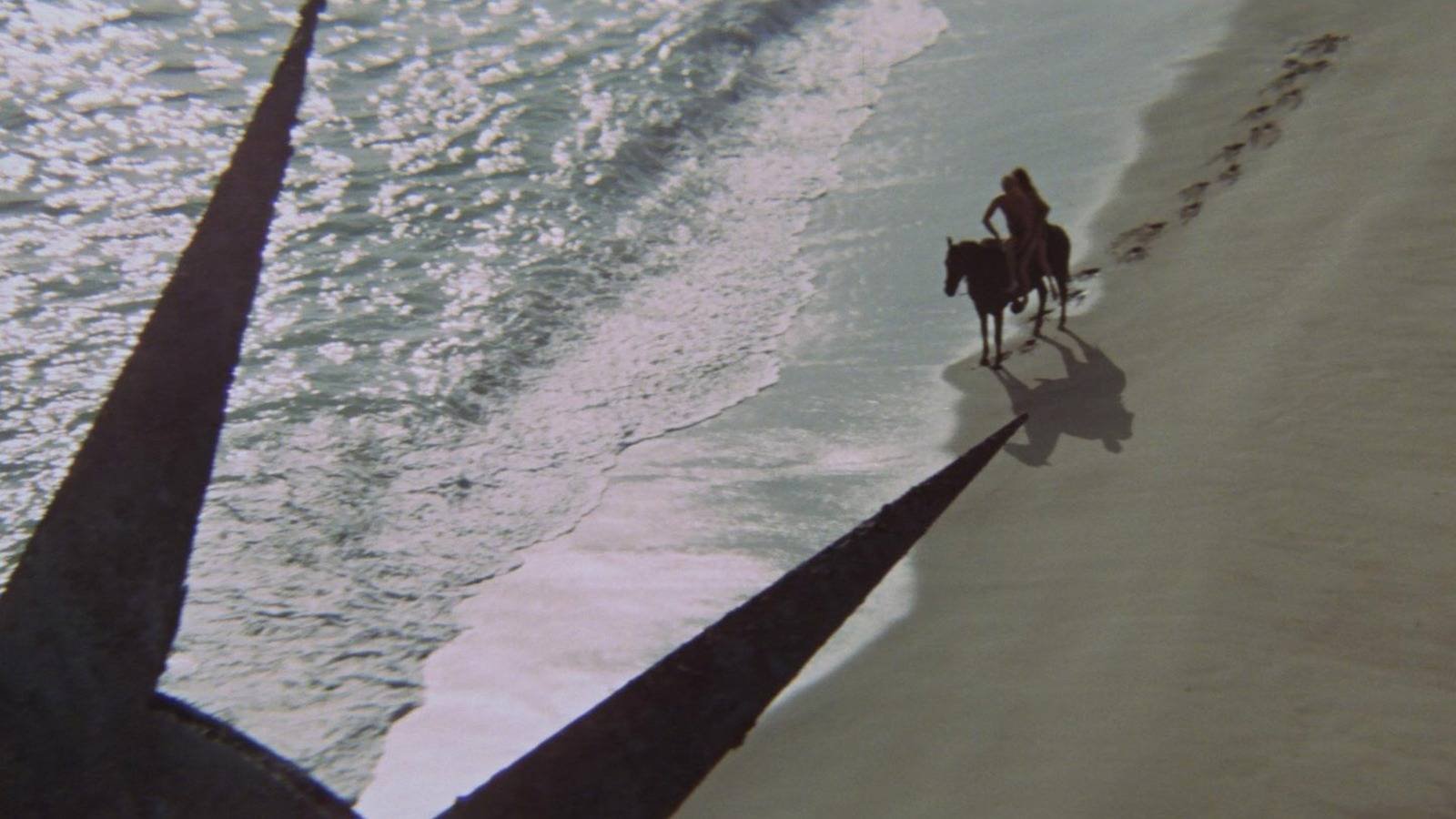
The sunken Statue of Liberty is one of the most recognizable images in film and one of science fiction’s best twists. It lands at the very end, and it flips the entire story: the Planet of the Apes isn’t a distant alien world, it’s a ruined Earth.
Like Nolan’s horse, that moment plays out on a beach. George Taylor (Charlton Heston) has just escaped the apes when the statue slides into frame, the score rising, the camera closing in on his face.
“Oh my God. I’m back. I’m home,” he says. “All this time.”
The statue becomes a marker of human hubris and collapse. Nolan borrows that trick and sharpens it. He doesn’t blame humanity in the abstract. He blames his hero.
The same story, told two different ways
In The Odyssey, the horse first shows up in a song from the bard Phemius (Travis Scott), then in fuller detail from Menelaus (Jon Bernthal). Both versions frame Odysseus (Matt Damon) as the brilliant strategist, the man who cracked an impregnable city. That’s how most translations and adaptations play it too.
Then Nolan changes the terms.
Late in the film, Odysseus tells the story again, this time to Queen Penelope (Anne Hathaway). Through his eyes it isn’t a triumph. It’s a wound. He’s haunted by the sack of the city and the slaughter of innocents, and that horror is the reason he can’t find his way home.
Breaking Zeus’ Law
The horse becomes a stand-in for a broken rule. The movie sets up Zeus’ Law early on, a code built around offering hospitality to strangers. It’s Nolan’s take on Xenia, the Greek idea that you treat visitors with kindness and respect.
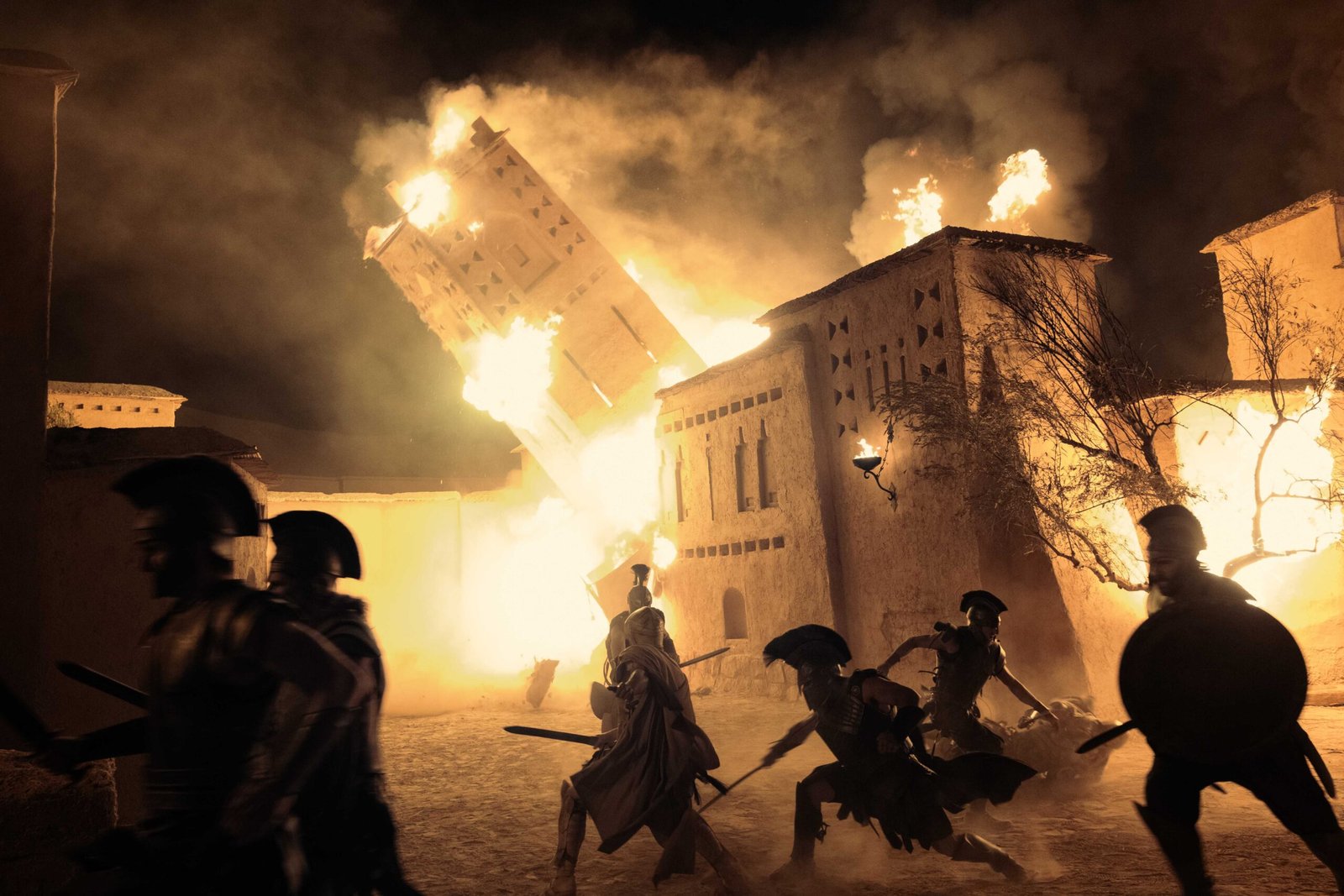
Odysseus shatters it. A fake peace offering turns Trojan hospitality into a weapon, and once that rule is gone, the world comes apart. Sea people raid islands. Suitors squat in his house in Ithaca like they own it. Lawlessness, everywhere he looks.
Or, as Charlton Heston might put it: “We finally really did it. You Maniacs! You blew it up! Ah, damn you! God damn you all to hell!”
A symbol turned inside out
Nolan drags the old texts out of the realm of gods and monsters and into a world of complicated people you can actually feel something for. A symbol of victory becomes a symbol of a civilization falling apart.
And after 20 years, he finally got the shot he’d been carrying around since he was a kid, the ruined horse on the sand, holding its own against the image that started it all.
The Odyssey is in theaters now.








[…] movies tend to work no matter the format. Christopher Nolan's Dark Knight trilogy pulled $2.46 billion worldwide against a combined $585 million budget. The Batman in 2022 spun off […]